Call Back Call Back WhatsApp Whatsapp
Vaginal Yeast Infection

Vaginal Yeast Infection – Causes, Symptoms and Treatment

If you’ve ever experienced itching, discomfort, or unusual discharge and wondered what was happening “down there,” you’re not alone. A vaginal yeast infection is one of the most common vaginal infections women experience, and yet, it’s also one of the most misunderstood. Many women feel embarrassed talking about it, assume it’s linked to poor hygiene, or worry it might be sexually transmitted. The truth is far simpler and far more reassuring. Many women feel embarrassed talking about it, assume it’s linked to poor hygiene, or worry it might be sexually transmitted. The truth is far simpler and far more reassuring.

What Is a Vaginal Yeast Infection?

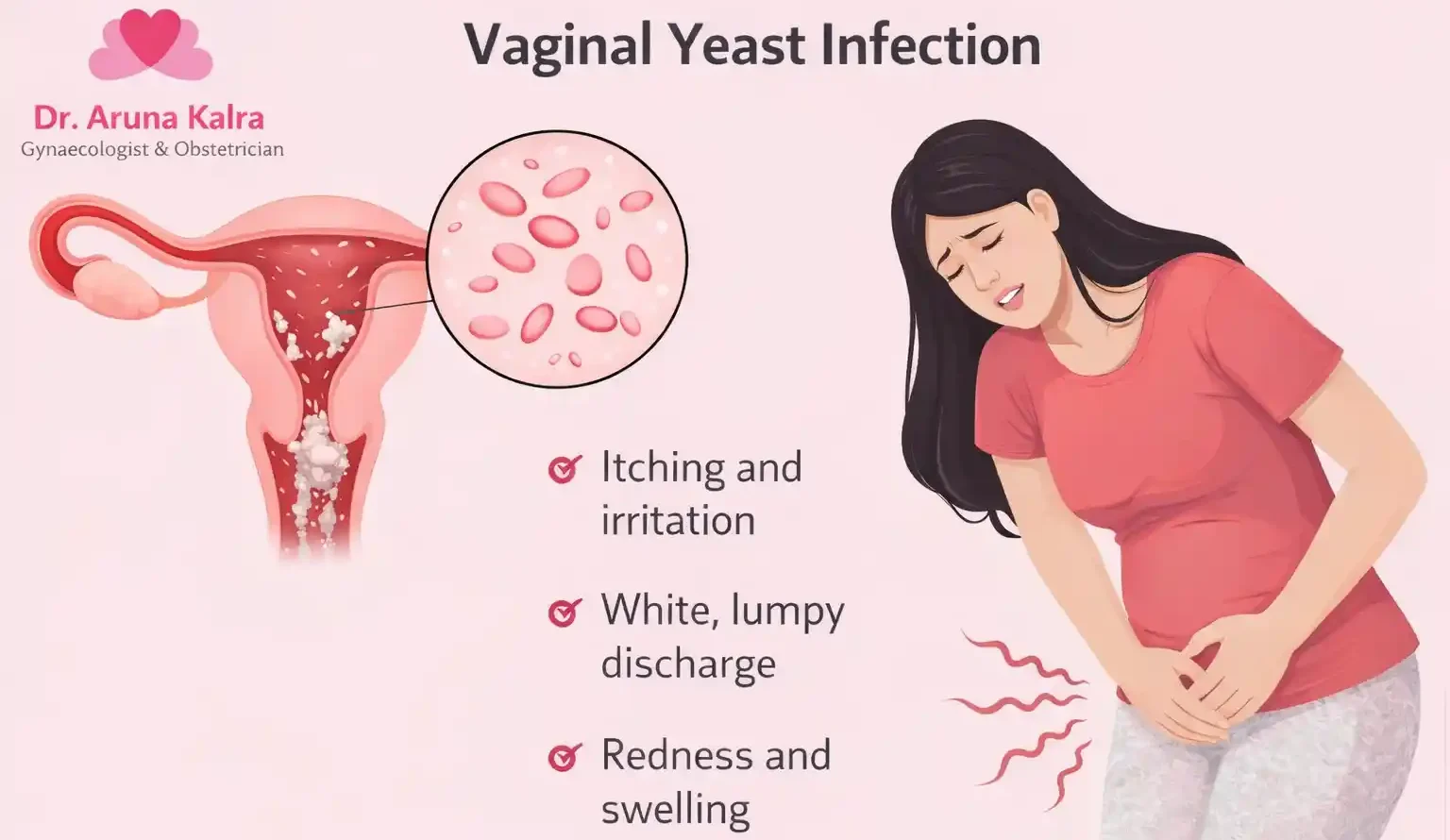
A vaginal yeast infection, also called a candida infection or vaginal fungal infection, happens when there is an overgrowth of yeast in the vagina. The most common yeast involved is Candida albicans, which normally lives in small amounts in the vagina without causing any harm.

Problems arise when the natural balance of bacteria and yeast in the vagina gets disturbed. When yeast grows unchecked, it leads to inflammation – and that’s when symptoms begin.

  • A vaginal yeast infection is not a sexually transmitted infection (STI).
  • You can get it even if you’re not sexually active.

What Causes Vaginal Yeast Infections?

The vagina maintains a delicate balance of “good” bacteria and yeast. Anything that disrupts this balance can allow yeast to multiply.

One of the most common causes is antibiotic use. While antibiotics treat harmful bacteria, they can also wipe out beneficial bacteria that normally keep yeast under control. Hormonal changes such as those during pregnancy, before periods, or while using hormonal contraceptives can also make the vaginal environment more yeast-friendly.

  • Poorly controlled diabetes
  • Weakened immunity
  • Wearing tight or non-breathable clothing for long hours
  • Prolonged moisture (staying in wet clothes)
  • Excessive use of scented soaps, vaginal washes, or douching
  • High sugar intake in some women

Having a yeast infection does not mean you are unhygienic. In fact, over-cleaning the vaginal area can sometimes increase the risk.

Common Symptoms of a Vaginal Yeast Infection

A yeast infection doesn’t always announce itself the same way for everyone. For some women, the discomfort creeps in slowly. For others, it seems to show up almost overnight.

  • The most common complaint is itching – sometimes mild, sometimes intense enough to be distracting through the day.
  • You might notice irritation around the vaginal opening or a general soreness that makes sitting, walking, or even wearing tight clothes uncomfortable.
  • Many women also notice a change in discharge. It’s often thick, white, and clumpy, frequently compared to cottage cheese, and usually doesn’t have a strong or unpleasant smell.
  • Burning is another common symptom, especially while passing urine or during sex. The skin around the vagina may look red or slightly swollen and feel tender to touch.

That said, there’s no single “correct” way a yeast infection looks or feels. Some women mainly notice discharge, with very little itching. Others feel itchy and sore but see almost no discharge at all. That variation is normal, and one of the reasons yeast infections are sometimes confused with other vaginal conditions.

How Is a Yeast Infection Diagnosed?

In many cases, a doctor can make a fairly good judgment just by listening to your symptoms and doing a simple examination. When the signs are classic and mild, treatment may begin right away.

If the symptoms keep coming back, feel unusually severe, or don’t quite fit the typical picture, your doctor may take a vaginal swab. This helps confirm whether yeast is actually the cause and rules out other infections that can feel very similar, such as bacterial vaginosis or sexually transmitted infections.

Trying to diagnose yourself can be tricky. Vaginal itching and discharge can have several causes, and using the wrong treatment can sometimes make things worse instead of better. If you’re unsure, it’s always safer — and usually faster — to get checked.

Treatment Options for Vaginal Yeast Infection

The good news is that yeast infection treatment is usually simple and effective when the diagnosis is correct.

  • Most uncomplicated yeast infections are treated with antifungal medicines. These may be given as vaginal creams, suppositories, or sometimes as a single oral tablet. Many women start feeling relief within a few days, but it’s important to complete the full course even if symptoms settle early.
  • If yeast infections keep returning, your doctor may suggest a longer treatment plan or look for underlying reasons such as blood sugar imbalance, hormonal changes, or immune-related issues.

It’s best to be cautious with home remedies or online “quick fixes.” Some natural or DIY treatments can irritate the vaginal lining and delay healing. If you’re tempted to try something new, check with your doctor first.

How to Prevent Vaginal Yeast Infections?

Not all yeast infections can be prevented – and getting one doesn’t mean you’ve done something wrong. Still, a few everyday habits can lower the risk.

  • Wearing breathable cotton underwear and avoiding very tight clothes for long periods helps keep the area dry.
  • Changing out of damp clothes quickly, after exercise or swimming, also makes a difference.
  • When it comes to cleaning, less is more. Gently washing the external area with water or a mild, unscented soap is enough. Douching or using vaginal washes often does more harm than good.

If you’re prescribed antibiotics and know you’re prone to yeast infections, mention it to your doctor. And if you have diabetes, keeping blood sugar levels well controlled can reduce repeat infections. Most importantly, pay attention to early signs. Treating symptoms sooner usually means quicker relief.

Myths vs. Facts About Yeast Infections

There’s a lot of unnecessary worry around yeast infections, mostly because of things we’ve heard or assumed over the years.

  • Many women believe a yeast infection means they haven’t been “clean enough.” In reality, it’s often the opposite. Over-washing, using scented products, or trying too hard to keep the area “extra clean” can upset the natural balance and actually make infections more likely.
  • Another common fear is that yeast infections are passed through sex. They aren’t. You don’t “catch” a yeast infection from someone else in the way you would an STI.
  • It’s also worth knowing that not every itch or discomfort automatically means yeast. Vaginal skin is sensitive, and irritation can come from many different causes. That’s why guessing and self-treating doesn’t always help.
  • And finally, having a yeast infection doesn’t mean something is seriously wrong with your body. Most women will deal with at least one in their lifetime. It’s common, and it’s manageable.

When to See a Doctor?

Sometimes, your body needs a little extra help, and that’s okay.

If this is the first time you’re experiencing these symptoms, or if they feel stronger than usual, it’s best to see a doctor rather than trying to manage it on your own. You should also get checked if the infection keeps coming back, or if treatment you tried hasn’t really helped.

It’s especially important to seek medical advice if you’re pregnant, have diabetes, or have a condition that affects your immunity. In these situations, even common infections need a bit more care.

Getting the right diagnosis early can save you days of discomfort – and a lot of unnecessary stress.

Conclusion: Caring for Vaginal Health

A vaginal yeast infection can be uncomfortable, frustrating, and sometimes emotionally tiring. But it’s also one of the easiest vaginal conditions to treat once you know what you’re dealing with.

Understanding what’s happening in your body, paying attention to early signs, and choosing the right yeast infection treatment can help you feel better quickly and protect your vaginal health in the long run.

Most importantly, there is no shame here. Vaginal infections are part of being human. Your body isn’t “failing” you, it’s simply asking for a little balance, care, and attention.


FAQs


Q1. Does a yeast infection go away by itself?
Ans.
Mild infections may settle, but most require treatment to fully resolve and prevent recurrence.

Q2. What causes vaginal yeast infection?
Ans. Antibiotics, hormonal changes, diabetes, weakened immunity, and disruption of vaginal bacteria are common causes.

Q3. What are the stages of a yeast infection?
Ans. Early irritation, followed by itching and discharge, which may worsen without treatment.

Q4. Can I treat myself for a yeast infection?
Ans. Only if you are certain it’s a yeast infection and have had it diagnosed before. Otherwise, see a doctor.

Q5. What is the main treatment of yeast infection?
Ans. Antifungal medications, either oral or vaginal, prescribed based on severity and recurrence.

Leave a Reply

Your email address will not be published. Required fields are marked *