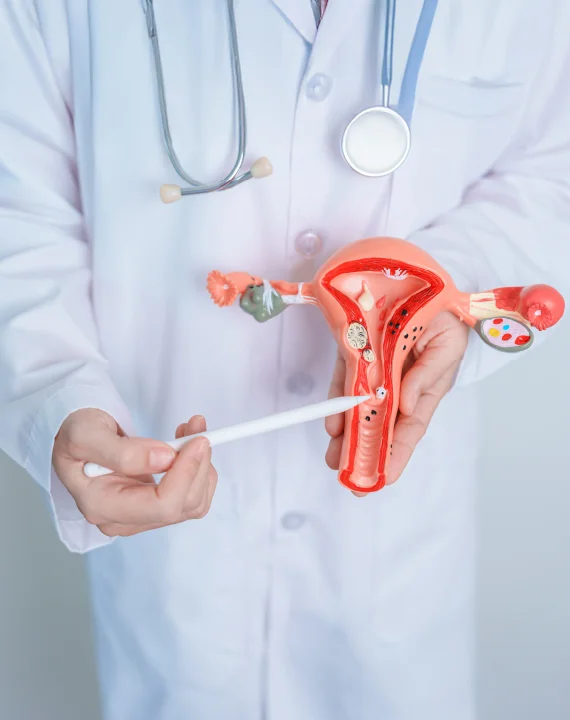
Cervical Dysplasia Treatment in Gurgaon

Expert Care by Dr. Aruna Kalra for Early Detection & Prevention

call now 9599062988 Call Now

What is cervical dysplasia?

Cervical dysplasia is when the cells that line the cervix, which is the lowest section of the uterus that links to the vagina, change in a way that isn't normal. It is not cancer, but it is a precancerous condition, which means that if it is not treated, it could turn into cervical cancer over time.

A Pap smear test frequently finds these abnormal cells, often before any symptoms show up. Cervical dysplasia is divided into grades based on how bad it is:

  • Mild (CIN 1) are small alterations in cells that usually go away on their own.
  • Moderate (CIN 2) means that the problems are more obvious and need treatment
  • Severe (CIN 3) is an advanced precancerous stage that needs to be treated very away.

Patients get accurate diagnoses, intensive counselling, and personalised care from Dr. Aruna Kalra, a top gynaecologist in Gurgaon, to stop the disease from getting worse and protect their reproductive health.

Symptoms of Cervical Dysplasia

In the early stages, most women with cervical dysplasia don't have any prominent symptoms. That's why it's so important to get checked out on a frequent basis. When symptoms do show up, they could start manifesting in the following signs:

  • Abnormal vaginal bleeding between cycles, post-coitus, or even post-menopause
  • Unusual watery or bloody vaginal discharge
  • Painful intercourse
  • Pain in the pelvis or lower back (in more severe situations)

These aren't particular or specific to this condition, however, they are very similar to other gynaecological problems. So, if you start observing any long-lasting changes in your menstruation or vaginal health, you should certainly consult a specialist. With two decades of experience in handling complex cervical dysplasia treatments, Dr Aruna Kalra is a sought after cervical dysplasia expert in Gurgaon.

Causes & Risk Factors of Cervical Dysplasia

The main reason for cervical dysplasia is getting infected with high-risk varieties of Human Papillomavirus (HPV), especially types 16 and 18. A persistent HPV infection causes alterations in cells that might lead to dysplasia.But not everyone who has HPV gets this illness.Some women are more likely to get this compared to others. Some risk factors are:

  • An active sex life at a younger age or with more than one partner
  • Smoking or being exposed to second-hand smoke
  • A weakened immune system due to HIV infection or long-term use of steroids
  • Using birth control tablets for a prolonged period of time
  • Other sexually transmitted infections (STIs)
  • Bad hygiene in the genital area
  • Family history of cervical or similar malignancies

Regular Pap and HPV tests is the best and time tested approach to find early alterations in cells before they turn into severe dysplasia or cervical cancer.

Get in Touch With Us

Dr. Aruna Kalra

Dr. Aruna Kalra

  • 25+ yrs experience in laparoscopic & robotic gynecological surgeries
  • 5,000+ successful procedures | 1-day, scarless, painless recovery

How is Cervical Dysplasia Diagnosed?

In order to accurately diagnose cervical dysplasia, you need to use a mix of screening procedures and confirmatory testing. The most widely accepted screening tests are:

  • Pap Smear (Pap Test): This test looks for cells in the cervix that are not normal or that could become malignant. Women between the ages of 21 and 65 should get this test every three years.
  • HPV DNA Test: It is easy to find high-risk HPV strains that cause dysplasia and cervical cancer with this screening test.
  • Further, co-testing combines the Pap and HPV tests to make them more accurate.

If the screening findings show problems, the following may be suggested:

  • A colposcope is a special microscope that is used to look at the cervix and find any spots that are not normal. During a colposcopy, little pieces of tissue are extracted to determine the presence and severity of dysplasia.
  • Endocervical curettage is a procedure that takes cells from inside the cervical canal.

Dr. Aruna Kalra makes sure that every patient understands and follows these processes with care. She talks about the results and gives them point to point guidance on what to do next to help them feel less anxious and make smart choices.

Surgery Image

Cervical Dysplasia Treatment Options

The type of cervical dysplasia therapy a woman gets in Gurgaon depends on how bad the dysplasia is, how old she is, and whether or not she wants to get pregnant. Dr. Aruna Kalra follows standards that are acknowledged around the world and aim on getting rid of aberrant cells while keeping good cervical tissue.

The following are the different treatment approaches that need to be personalised as per the patient’s concerns.

  • Watch and wait (for mild dysplasia or CIN 1): In many cases, minor dysplasia goes away on its own. But constant monitoring is needed. To keep an eye on the subsequent changes, patients are advised to get regular Pap smears or HPV tests done in intervals of 6 to 12 months. While this happens, most patients are encouraged to make changes to their lifestyle. The most common advice is to stop smoking followed by a balanced diet to keep immune systems boosted.
  • Medical and minimally invasive procedures: In case the patient’s condition is between moderate to severe (CIN 2 or CIN 3), it may be essential to remove aberrant cells.

For this the available treatment alternatives are:

  • Cryotherapy: Using liquid nitrogen to freeze tissue that isn't normal.
  • LEEP (Loop Electrosurgical Excision Procedure): This procedure uses an electrical wire loop to cut off tissue that is not healthy.
  • Cold Knife Conization: This takes off a cone-shaped piece of the cervix that has abnormal cells. This approach is best for bigger or deeper lesions.
  • Laser Ablation: This uses focused laser energy to kill off aberrant tissue.

These are quick treatments that don't require an overnight stay and have very little pain. The recovery is also extremely good. Dr. Aruna Kalra and her team always makes sure that each patient gets tailored counselling and follow-up care after the treatment to keep an eye on their healing and prevent it from happening again.

Preventing Cervical Dysplasia

Cervical dysplasia is mostly something you can avoid. Taking a few simple steps will greatly minimise your risk:

  • Get the vaccine for HPV: The vaccine protects against high-risk HPV strains and is recommended for children and women ages 9 to 26.
  • Routine screening: Pap smears and HPV tests help find early alterations before they get worse.
  • Quit smoking: Smoking lowers immune defences and promotes HPV persistence.
  • Practise Safe Intercourse: Use condoms and limit your sexual partners to minimise the risk of getting HPV.
  • Immunity Check: Keep your immune system robust by eating a balanced diet, working out regularly, and getting enough sleep.

Dr. Aruna Kalra also works in the field of preventative gynaecology, giving women the tools they need to protect themselves through early education and screening by holding HPV vaccination programs and awareness events in Gurgaon.

Cervical dysplasia is not cancer, but it is a symptom that something is wrong and needs to be checked out. Women can totally recover and avoid cervical cancer if they diagnose dysplasia early on, obtain skilled care, and go for regular checkups under specialist supervision. With the help of Dr. Aruna Kalra, women in Gurgaon get complete, caring, and cutting-edge care that includes prevention, precision, and above all a chance to lead a healthy and happy life.

Treatment Approach for Cervical Dysplasia

Cervical dysplasia involves observation for low‑grade lesions and removal of abnormal cells with procedures such as LEEP, cone biopsy, laser therapy, or cryotherapy for moderate to severe disease.

clock
Underlying condition

fibroids, endometriosis, uterine prolapse, cancer, or heavy bleeding.

clock
Extent of surgery needed

total, partial, or radical hysterectomy.

clock
Surgical technique

Robotic-Assisted, Laparotomy, or Laparoscopic Ovarian Cystectomy.

clock
Patient factors

age, medical history, and overall health.

Procedure walkthrough of Cervical Dysplasia

Preparation

Pre-surgical evaluation (blood tests, imaging, ECG). Fasting for several hours before surgery.

Incision & Access

May be done in the lower abdomen, through the vagina, or with small camera-guided incisions.

Closure

Incisions or vaginal openings are sutured. Sterile dressing is applied.

Recovery

Hospital stay usually ranges from 1–3 days (may be shorter with minimally invasive surgery).

Why trust Dr. Aruna Kalra?

25+ years of surgical expertise
5000+successful surgeries
Expert in advanced women’s surgical care
Medical mentor & thought leader

Testimonials

what is Gynae Cancer & role of a OBGYN in Gynae Cancer

5 Things About Your Gynae Health

Patient - Nandita Sharma

Why trust Dr. Aruna Kalra?

25+ years of surgical expertise
5000+successful surgeries
Expert in advanced women’s surgical care
Medical mentor & thought leader

What our patient say about us ?

Do you have any query ?

Here are some frequently asked questions
Yes, in most circumstances. Persistent infection with high-risk HPV strains is the primary cause, although variables such as smoking and compromised immunity also play a role.
In the beginning, there aren't usually any clear signs. That's why it's important to have regular Pap and HPV tests to find changes early.
Yes. Dysplasia that is mild or cured usually doesn't influence fertility. Conization and LEEP are two procedures that keep the uterus intact and make it possible for women to get pregnant again.
If the dysplasia is mild, it may only need to be watched. If it is moderate or severe, minimally invasive therapies like LEEP or cryotherapy can help.
Yes. In many situations, especially minor dysplasia, the problem can go away on its own or be totally cured with early treatment.
Doctor
Call Back Call Back WhatsApp Whatsapp