Pre-Surgery Planning
Detailed imaging, blood tests, and anaesthetic assessment.


Advanced Precision Surgery by Dr. Aruna Kalra
 +919871213257
Call Now
+919871213257
Call Now
Robotic gynaecological surgery is an advanced form of minimally invasive surgery where the surgeon uses a robotic system to perform complex procedures with enhanced precision, flexibility, and control. The robotic platform translates the surgeon’s hand movements into highly accurate micro-movements, allowing safer surgery even in difficult pelvic anatomy.
This approach is especially valuable for complex gynaecological conditions where conventional laparoscopy may be technically challenging.

Each procedure is individually planned after detailed imaging and clinical assessment.
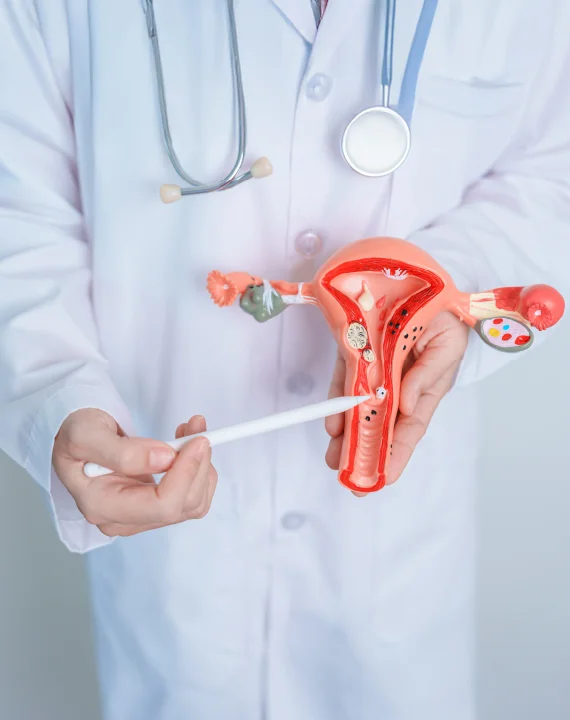
While laparoscopy is effective for many cases, robotic surgery offers enhanced dexterity, 3D magnified vision, and improved ergonomics, making it especially suitable for complex pelvic surgeries, obesity-related challenges, and dense adhesions.
Most patients resume daily activities within a few days. Hospital stay is usually 1–2 days, with significantly reduced postoperative discomfort compared to open surgery.
Robotic surgery is planned after comprehensive evaluation to ensure optimal safety, precision, and long-term outcomes.

fibroids, endometriosis, prolapse, cancer, or complex hysterectomy.

extent of disease, adhesions, and prior surgeries.

robotic assistance for delicate dissection and suturing.

age, fertility goals, and overall health.
Detailed imaging, blood tests, and anaesthetic assessment.
Robotic arms are docked through small keyhole incisions.
Surgeon controls robotic instruments for meticulous tissue handling.
Early mobilisation with faster discharge and minimal pain.
Dr. Aruna Kalra | Patient - Pallavi
Dr. Aruna Kalra | Patient - Dr. Dipender
Dr. Aruna Kalra | Patient - Nandita Sharma
Frequently asked questions on robotic gynaecological surgery