Call Back Call Back WhatsApp Whatsapp
Repeated Miscarriages Common Causes and When to See a Specialist

Repeated Miscarriages: Common Causes and When to See a Specialist

Pregnancy is one of the most beautiful journeys in a woman’s life. But when a pregnancy ends unexpectedly — especially more than once — it can be emotionally and physically overwhelming.

Repeated miscarriages are more common than many people realize, and in most cases, the underlying cause can be diagnosed and treated successfully with expert medical care.

As a senior obstetrician managing high-risk pregnancies for over 25 years in Gurgaon, I have helped many couples overcome recurrent pregnancy loss and achieve a healthy delivery.

What is Recurrent (Repeated) Miscarriage?

Repeated miscarriage, medically termed Recurrent Pregnancy Loss (RPL), is defined as:

  • Two or more consecutive pregnancy losses before 20 weeks of gestation.

If you have experienced two miscarriages, it is advisable to seek specialist evaluation rather than waiting further.

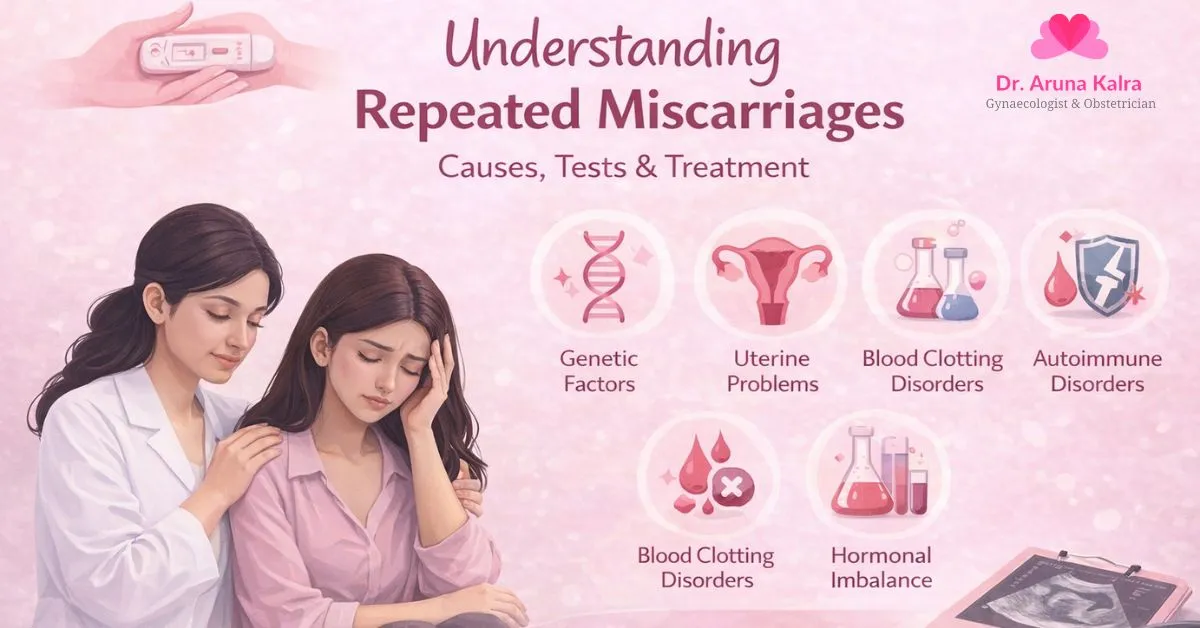
Common Causes of Repeated Miscarriages

1️. Chromosomal or Genetic Issues

In early pregnancy, chromosomal abnormalities are one of the most common causes of miscarriage. Sometimes one partner may carry a balanced chromosomal rearrangement that increases the risk.

Genetic testing can help identify this.

2️. Hormonal Imbalance

Hormones play a crucial role in sustaining pregnancy. Common hormonal causes include:

Proper hormonal correction significantly improves pregnancy outcomes.

3️. Uterine Abnormalities

Structural issues inside the uterus can prevent proper implantation or growth.

These include:

  • Uterine septum
  • Fibroids
  • Scar tissue
  • Congenital uterine defects

With advanced minimally invasive and laparoscopic surgery, these conditions can often be corrected safely.

As a specialist in minimally invasive and scarless laparoscopic surgery with advanced robotic training, I ensure precise diagnosis and treatment with faster recovery.

4️. Autoimmune Disorders

Conditions such as Antiphospholipid Antibody Syndrome (APS) can interfere with placental blood supply, leading to pregnancy loss. Early diagnosis and treatment with blood thinners can help sustain pregnancy.

5️. Blood Clotting Disorders

Certain inherited clotting disorders may increase miscarriage risk. Specialized blood tests help identify these conditions.

6️. Advanced Maternal Age

After 35 years of age, the risk of chromosomal abnormalities increases due to reduced egg quality.

7️. Lifestyle & Medical Conditions

  • Smoking
  • Obesity
  • Severe stress
  • Poorly controlled medical illnesses

Healthy lifestyle modifications play an important role in pregnancy success.

When Should You See a Specialist?

You should consult a high-risk pregnancy specialist if:

  • You have had two or more miscarriages
  • You are above 35 years
  • You have thyroid, PCOS, or autoimmune disorders
  • You have irregular menstrual cycles
  • You previously had a complicated pregnancy

Early evaluation improves the chances of a healthy pregnancy.

How Is Recurrent Miscarriage Evaluated?

Investigations may include:

  • Hormonal profile
  • Thyroid function tests
  • Blood sugar levels
  • Autoimmune screening
  • Genetic karyotyping
  • Pelvic ultrasound
  • Hysteroscopy
  • Thrombophilia screening

Each patient’s evaluation plan is individualized.

Treatment Options for Repeated Miscarriages

Treatment depends on the cause and may include:

  • Hormonal support
  • Thyroid correction
  • Blood thinners
  • Minimally invasive surgical correction
  • Close pregnancy monitoring
  • Lifestyle management

With structured care and monitoring, most women can have a successful pregnancy.

Specialized Care in Gurgaon

I, Dr. Aruna Kalra, am one of the most trusted Gynaecologists and Obstetricians in Gurgaon, Haryana, with over 25 years of experience.

Currently, I serve as:

  • Director & Senior Consultant – Department of Gynaecology and Obstetrics at CK Birla Hospital
  • Managing Director – The Mums Clinic

I began my journey at Kasturba Hospital and later gained extensive experience at Batra Hospital and Paras Hospital.

My expertise includes:

  • High-risk pregnancy management
  • Painless labour
  • Vaginal Birth After Caesarean (VBAC)
  • Minimally invasive gynaecological surgery
  • Scarless laparoscopic surgery
  • Advanced robotic surgery

With a patient-centric and sensitive approach, along with ongoing prenatal yoga sessions, I have achieved nearly 90% normal vaginal deliveries, even in women who previously had a C-section.

Emotional Support Matters

Repeated miscarriage affects mental health deeply. Compassionate counselling and continuous monitoring during pregnancy are equally important.

You are not alone in this journey. With proper diagnosis, advanced treatment, and emotional support, successful pregnancy is possible.

FAQs – Repeated Miscarriages

Q1. Can I get pregnant successfully after repeated miscarriages?
Yes. With correct diagnosis and management, the success rate is very high.

Q2. Does previous C-section increase miscarriage risk?
Not directly, but uterine scar evaluation is important in some cases.

Q3. Is surgery always required?
No. Surgery is needed only if a structural issue is identified.

Q4. How soon should I try again?
This depends on individual medical condition and specialist advice.

Conclusion

Repeated miscarriages can be distressing, but medical advancements today offer highly effective diagnostic and treatment options. If you have experienced two or more pregnancy losses, seeking expert consultation early can significantly improve your chances of carrying a healthy pregnancy to term.

If you are looking for expert care for recurrent pregnancy loss or high-risk pregnancy in Gurgaon, specialized and compassionate guidance is essential for a positive outcome.

Leave a Reply

Your email address will not be published. Required fields are marked *