Your consultation request has been successfully registered. Our counsellor will connect with you within the next working hour.
Need immediate help?
Call Us
Picture two women in a gynaecologist’s clinic, both hearing the same words: “You have a fibroid.” One has never noticed a thing. The other has spent years planning her life around exhausting periods. Same diagnosis, very different stories.
The difference often comes down to one question: where is the fibroid growing? Let’s walk through the types of uterine fibroids and what each one means for you.
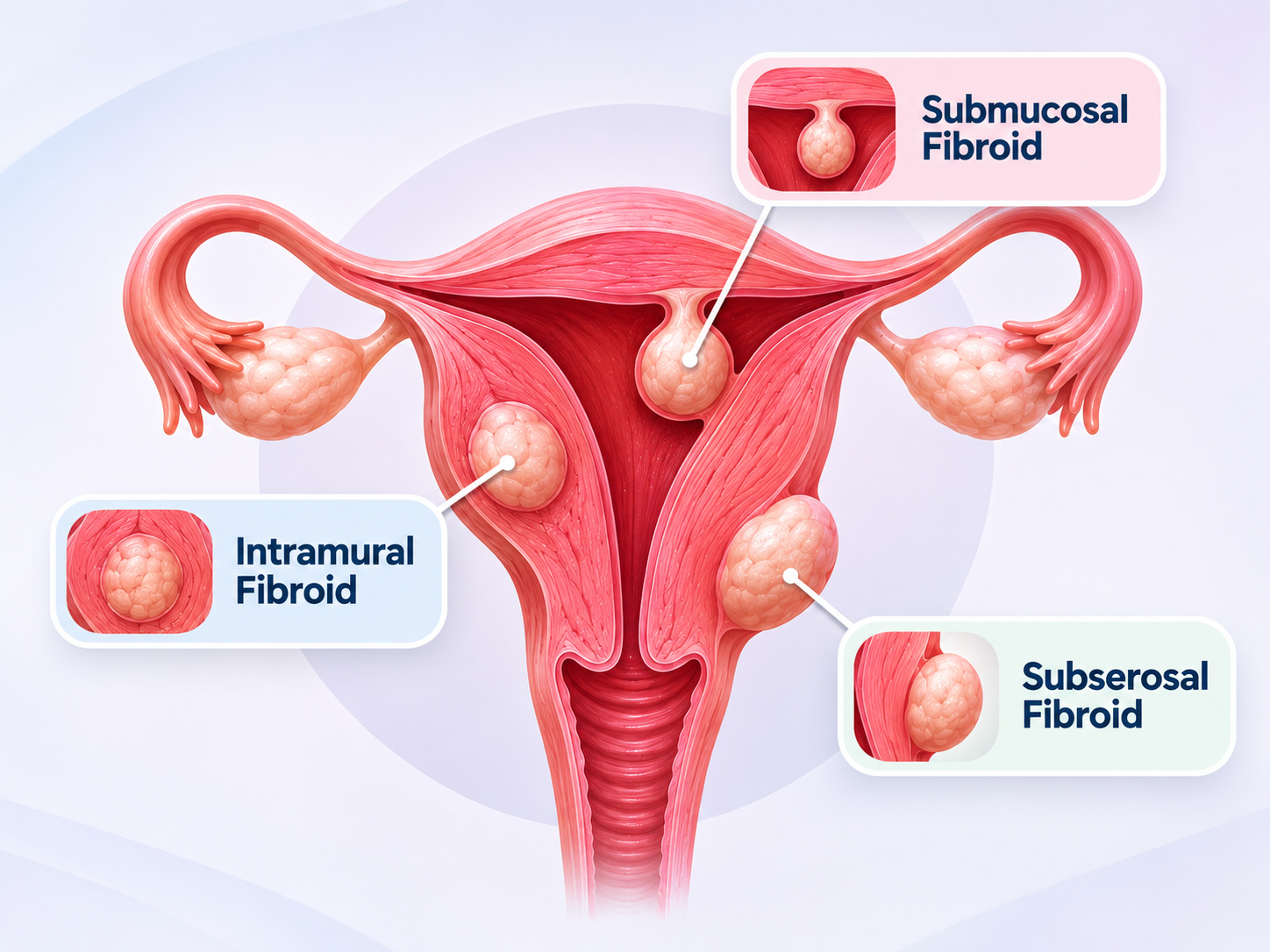
Uterine fibroids are non-cancerous growths of muscle and fibrous tissue in or around the uterus, and they are grouped into three main types based on their location: submucosal, intramural and subserosal.
Think of the uterus as a three-layer pear. There is a soft inner lining, a thick muscular middle wall and a thin outer covering. A fibroid can start in any of these layers, and its position often shapes the fibroid symptoms you feel more than its size does. Some women have a single fibroid, while others have several of different types at once. You may also hear them called leiomyomas or myomas, which is the same thing.
The three main types of uterine fibroids are submucosal, intramural and subserosal, named after the layer of the uterus in which they grow.
Each type tends to behave differently, depending on whether it presses on the lining, stays within the muscle or pushes outward. Here is a quick snapshot:
| Type | Where it grows | Commonly linked with |
| Submucosal | Beneath the inner lining, bulging into the cavity | Heavy periods, fertility concerns |
| Intramural | Within the muscular wall | Often silent; heaviness, longer periods |
| Subserosal | On the outer surface of the uterus | Pelvic pressure, backache |
Size matters too, but knowing where a fibroid sits is often the first step to understanding your symptoms. Together, location and size shape the conversation you’ll have with your doctor.
Submucosal fibroids grow just beneath the inner lining of the uterus and bulge into the uterine cavity. They are the least common type but often cause the most noticeable symptoms.
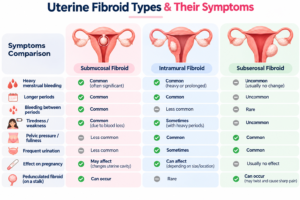
Here’s the interesting part: a small submucosal fibroid can sometimes be more disruptive than a much larger fibroid elsewhere, because it sits right next to the lining that sheds every month. Here is what women commonly notice:
Small in number but big in impact, submucosal fibroids matter most for your periods and for fertility planning.
Intramural fibroids grow within the muscular wall of the uterus and are the most common type of fibroid.
If fibroids were a neighbourhood, intramural fibroids would be the ones living in the middle of everything. They develop inside the thick muscle wall and can stretch the uterus as they grow. Many women find they go quietly unnoticed for years. When they do cause trouble, this is what it often looks like:
How much you feel depends on the size, number and exact position of the fibroid.
Very common, often silent, and noticeable mainly when they grow larger, intramural fibroids are the type doctors find most often.
Subserosal fibroids grow on the outer surface of the uterus and tend to push outward rather than into the uterine cavity.
Because they grow outward, subserosal fibroids usually have less effect on your menstrual flow. Instead, they can press on neighbouring organs. Depending on where they sit, you might notice:
If your periods seem normal but you have an unexplained fullness in your lower abdomen, this is one of the possibilities a doctor may check for with a scan.
Put simply, subserosal fibroids mostly cause pressure-related symptoms rather than period problems.

Fibroids are usually diagnosed with a pelvic examination and a pelvic ultrasound, which shows how many fibroids are present, how large they are and which type they are.
The good news is that finding out is usually simple and quick. These are the tests your doctor may use:
Don’t ignore the clues your body gives you, though. Keeping a simple note of your cycle length, flow and pain can help your gynaecologist connect your symptoms with the scan.
A scan together with your symptom history helps your doctor identify the type of fibroid and plan the right next step.
No. Many fibroids cause no symptoms and only need regular monitoring. Treatment is considered when fibroids cause bothersome symptoms or affect fertility, and the approach depends on the type, size and your life stage.
Hearing the word “fibroid” can feel alarming, but many women simply need periodic check-ups. When fibroid treatment is needed, the options may include medicines to manage bleeding or discomfort, or procedures to remove or treat the fibroid. The route is chosen based on its location. A submucosal fibroid, for example, may be approached differently from a subserosal one. Your age, symptoms and plans for pregnancy also matter. There is no single answer that suits everyone, and each decision is personal and made together with your doctor.
Treatment is not automatic with every fibroid. It is matched to the type, your symptoms and your goals.
See a gynaecologist if you have very heavy or prolonged periods, pelvic pain or pressure, bleeding between periods, difficulty conceiving or repeated miscarriages.
Sudden severe pelvic pain, or heavy bleeding that soaks through pads quickly, needs urgent medical attention. Otherwise, there is no need to wait until symptoms become unbearable.
If you’re looking for a gynaecologist in Gurgaon, you can consult Dr. Aruna Kalra, Obstetrician and Gynaecologist at CK Birla Hospital, Gurgaon, or a gynaecologist of your choice. They can review your symptoms and scans and guide you on the next steps. An early opinion brings clarity, and clarity brings calm.
Fibroids are very common, and for many women far less worrying than the word suggests. Submucosal fibroids tend to announce themselves through periods and fertility concerns, intramural fibroids often stay quiet until they grow, and subserosal fibroids speak through pressure. Knowing which of the types of uterine fibroids you may have turns vague worry into useful questions for your doctor. Your body usually drops hints early, so listen to them, track them and talk about them. Understanding your fibroid is the first step toward deciding what, if anything, to do about it.
Medical Disclaimer: This blog is for general awareness and does not replace personalised medical advice, diagnosis or treatment. Please consult a qualified gynaecologist for your specific condition.
Dr. Aruna Kalra's medical content team specialises in creating accurate, clear, and patient-focused healthcare content. With strong clinical understanding and expertise in technical writing and SEO, the team translates complex medical information into reliable, accessible resources that support informed decisions and uphold Dr. Aruna Kalra’s commitment to quality care.
Dr Aruna Kalra is a senior gynaecologist and obstetrician with over 25 years of clinical experience, widely respected for her calm clinical judgement, ethical decision-making, and expertise in advanced gynaecological surgery and obstetric care.