Call Back Call Back WhatsApp Whatsapp
What Causes Ovarian Cysts in Young Women?

What causes Ovarian Cysts in Young Women?

You’re 24, and your periods have been a little unpredictable lately. There’s a dull ache in your abdomen that you’ve blamed on stress, bad posture or last night’s dinner. Then a routine ultrasound mentions two words: “ovarian cyst.”

Cue the panic and a late-night Google spiral.

Before your mind runs to the worst, take a breath. Ovarian cysts in young women are far more common than most people realise, and in the majority of cases they are harmless. Let’s walk through what actually causes them, in plain language.

What Are Ovarian Cysts, and Are They Common in Young Women?

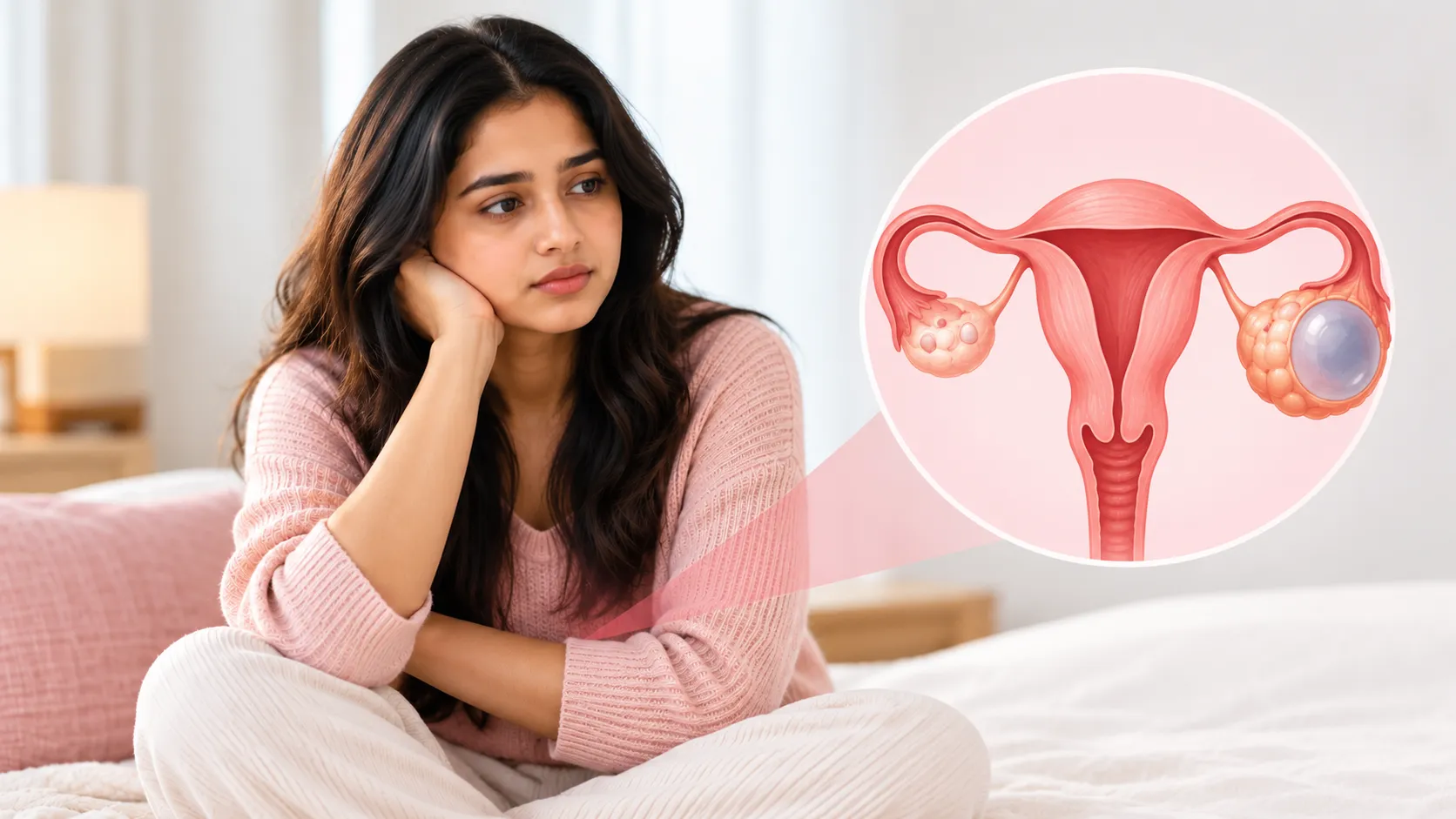
An ovarian cyst is a fluid-filled sac that develops on or inside an ovary. They are common in women of reproductive age, and most are benign and cause no trouble.

Think of your ovaries as two small gardens, each tending tiny pockets called follicles every month. Sometimes one of those pockets doesn’t behave quite as planned and swells with fluid. That’s a cyst. Many women have one at some point without ever knowing, because it quietly disappears on its own.

In short, finding a cyst is not a diagnosis of something serious. It is simply a finding that your doctor will interpret in context.

What Causes Ovarian Cysts in Young Women?

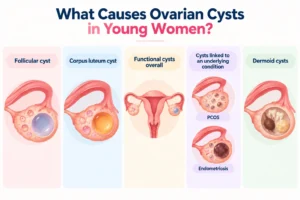
The most common cause of ovarian cysts is the normal monthly menstrual cycle, which produces what doctors call functional ovarian cysts. Other causes include PCOS, endometriosis and, less often, other types of growth.

  • Follicular cyst: A follicle grows to release an egg, but if the egg isn’t released, the follicle keeps filling with fluid.
  • Corpus luteum cyst: The egg is released, but the follicle seals up and fills with fluid.
  • Functional cysts overall: They are the cycle’s natural rhythm going slightly off-beat, and they often settle within a few menstrual cycles without treatment.
  • Cysts linked to an underlying condition: Some develop because of PCOS or endometriosis.
  • Dermoid cysts: They form from cells present since birth and are not caused by anything you did or ate.

What Causes Ovarian Cysts in Young Women?

So the first thing to know is that most cysts are no one’s fault. They are a quirk of biology, not a failure of lifestyle. Most cysts are no one’s fault. They are a quirk of biology, not a failure of lifestyle.

Is PCOS the Same as Having Ovarian Cysts?

Not exactly, but they are closely linked. PCOS causes many tiny, immature follicles to collect in the ovaries, and these often look like “cysts” on an ultrasound.

  • Not true large cysts: The name is slightly misleading, as these are numerous small follicles that never quite mature and release an egg.
  • The hormonal link: The cause is a hormonal imbalance that includes higher levels of androgens, which are hormones usually present in small amounts in women.
  • Common symptoms: Irregular periods, acne, excess facial or body hair, or weight changes often come along with the ultrasound finding.
  • Ultrasound alone isn’t enough: “Polycystic ovaries” on a scan without other symptoms doesn’t confirm PCOS.

PCOS is diagnosed from the full picture, not one scan, and your gynaecologist will piece it together.

Can Endometriosis Cause Ovarian Cysts?

Yes. Endometriosis can lead to an endometriosis cyst, medically called an endometrioma, and these are often called “chocolate cysts” because of the thick, dark fluid inside.

Endometriosis happens when tissue similar to the lining of the uterus grows outside it. When that tissue settles on the ovary, it bleeds a little with every cycle but has nowhere to go. Over time, the trapped blood forms a cyst.

This one deserves attention because it is frequently dismissed. Severe period pain that keeps you from college or work is not “just something women endure.” Painful periods, pain during intercourse or pain with bowel movements during periods are worth discussing with a doctor.

Do Hormonal Imbalance, Stress and Lifestyle Play a Role?

Hormonal imbalance and ovarian cysts are connected, since the hormones that drive ovulation (FSH and LH) must work in sync. Lifestyle can influence hormones indirectly, but it is rarely the sole cause of a cyst.

Your ovaries take their cues from signals sent by the brain. When those signals are disturbed, ovulation can become irregular, and cysts become more likely. Several things are known to be associated with this:

  • Starting periods at a very early age
  • Significant weight changes
  • Certain fertility medications that stimulate the ovaries
  • Long-standing, untreated hormonal conditions

Chronic stress and poor sleep can disrupt menstrual cycles, which is worth taking seriously, but there is no solid evidence that they directly cause cysts. Please don’t blame yourself. A balanced routine supports overall hormonal health, but it is not a guarantee against cysts.

What Are the Signs of an Ovarian Cyst in Young Women?

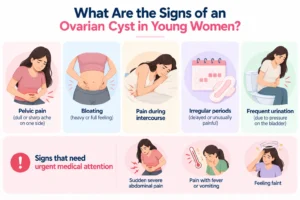
Many cysts cause no symptoms at all. When they do, common ovarian cyst symptoms include pelvic pain, bloating, irregular periods and a feeling of pressure in the lower abdomen.

Because small cysts are quiet, they are often discovered by chance during a scan for something else. Larger ones may bring:

  • A dull or sharp ache on one side of the lower abdomen
  • A heavy, bloated or full feeling
  • Pain during intercourse
  • Irregular, delayed or unusually painful periods
  • Frequent urination because of pressure on the bladder

What Are the Signs of an Ovarian Cyst in Young Women?

Some signs need prompt medical attention: sudden severe abdominal pain, pain with fever or vomiting, or feeling faint. These can indicate a cyst that has ruptured or twisted the ovary. If this happens, don’t wait for a routine appointment. Seek emergency care.

Most symptoms are mild and manageable, but any pain that keeps returning deserves an evaluation.

When Should You See a Gynaecologist in Gurgaon?

You should see a gynaecologist if you have persistent pelvic pain, very irregular or painful periods, or if a scan has shown a cyst that you want properly assessed. Early evaluation helps clarify what type of cyst it is and whether it needs monitoring or ovarian cyst treatment.

Not every cyst needs treatment. Many are simply monitored with repeat ultrasounds over a few weeks or months. Your doctor decides the approach depending on your age, the size and type of the cyst, your symptoms and your future plans, including fertility.

If you’re looking for a gynaecologist in Gurgaon, you may consult Dr. Aruna Kalra, Obstetrician and Gynaecologist at CK Birla Hospital, Gurgaon, or any gynaecologist of your preference, who can evaluate your symptoms, review your scans and guide you on the next steps. Seeking an opinion early brings clarity, and clarity brings calm.

Final Thoughts

Ovarian cysts in young women are common, and in most cases they come from the ordinary workings of the menstrual cycle rather than from anything you did wrong. Conditions like PCOS and endometriosis can also be behind them, which is why persistent symptoms deserve a proper check-up rather than guesswork.

Listen to your body, track your cycles, and don’t ignore pain just because it has become familiar. A simple ultrasound and a conversation with your doctor can turn worry into a clear plan.

Medical Disclaimer: This blog is for general awareness and does not replace personalised medical advice, diagnosis or treatment. Please consult a qualified gynaecologist for your specific condition.

Frequently Asked Questions

  1. Can an ovarian cyst go away on its own?
    Yes, many functional cysts resolve by themselves within a few menstrual cycles. Your doctor may suggest a follow-up ultrasound to confirm this.
  2. Can ovarian cysts affect fertility?
    Most simple cysts do not affect fertility. Conditions linked to cysts, such as PCOS or endometriosis, can influence ovulation or conception, so evaluation is helpful if you are planning a pregnancy.
  3. Can an ovarian cyst burst?
    It can happen, occasionally causing sudden pain. Many ruptures settle on their own, but severe pain, fever, dizziness or vomiting needs urgent medical attention.
  4. Which tests are used to diagnose an ovarian cyst?
    An ultrasound is the most common test. Depending on the findings, your doctor may also suggest blood tests or further imaging.
  5. Can ovarian cysts turn into cancer in young women?
    This is uncommon, as the vast majority of cysts in young women are benign. Your doctor will assess the cyst’s features on a scan to decide if any further evaluation is needed.
Dr. Aruna Kalra's Medical Content Team

Dr. Aruna Kalra's Medical Content Team

Dr. Aruna Kalra's medical content team specialises in creating accurate, clear, and patient-focused healthcare content. With strong clinical understanding and expertise in technical writing and SEO, the team translates complex medical information into reliable, accessible resources that support informed decisions and uphold Dr. Aruna Kalra’s commitment to quality care.

This content is reviewed by

Dr. Aruna Kalra

Gynaecologist and Obstetrician

Dr Aruna Kalra is a senior gynaecologist and obstetrician with over 25 years of clinical experience, widely respected for her calm clinical judgement, ethical decision-making, and expertise in advanced gynaecological surgery and obstetric care.

Leave a Reply

Your email address will not be published. Required fields are marked *