Call Back Call Back WhatsApp Whatsapp
Nerve Endometriosis When Endometriosis Affects Your Nerves

Nerve Endometriosis: When Endometriosis Affects Your Nerves

Does your pelvic pain feel sharp, burning or like an electric shock, shooting down your leg? That’s not “just bad period pain,” and you’re not exaggerating. It could be nerve endometriosis, where endometriosis tissue grows on or near the nerves in your pelvis. Because these nerves help control how you move, feel, and use your bladder, bowel and sex life, this pain needs a proper check-up, not another round of painkillers.

Many women live with this pain for years because it looks nothing like the cramps they’ve been told to expect. It can show up in your buttock, thigh or lower back, and it often doesn’t ease with usual hormone treatments. The good news is that once the cause is found, real relief is possible. 

In this blog, we explain what this pain feels like, how doctors find out if nerves are involved, and which treatments actually help. We also cover the warning signs that need urgent medical care.

What is Nerve Endometriosis?

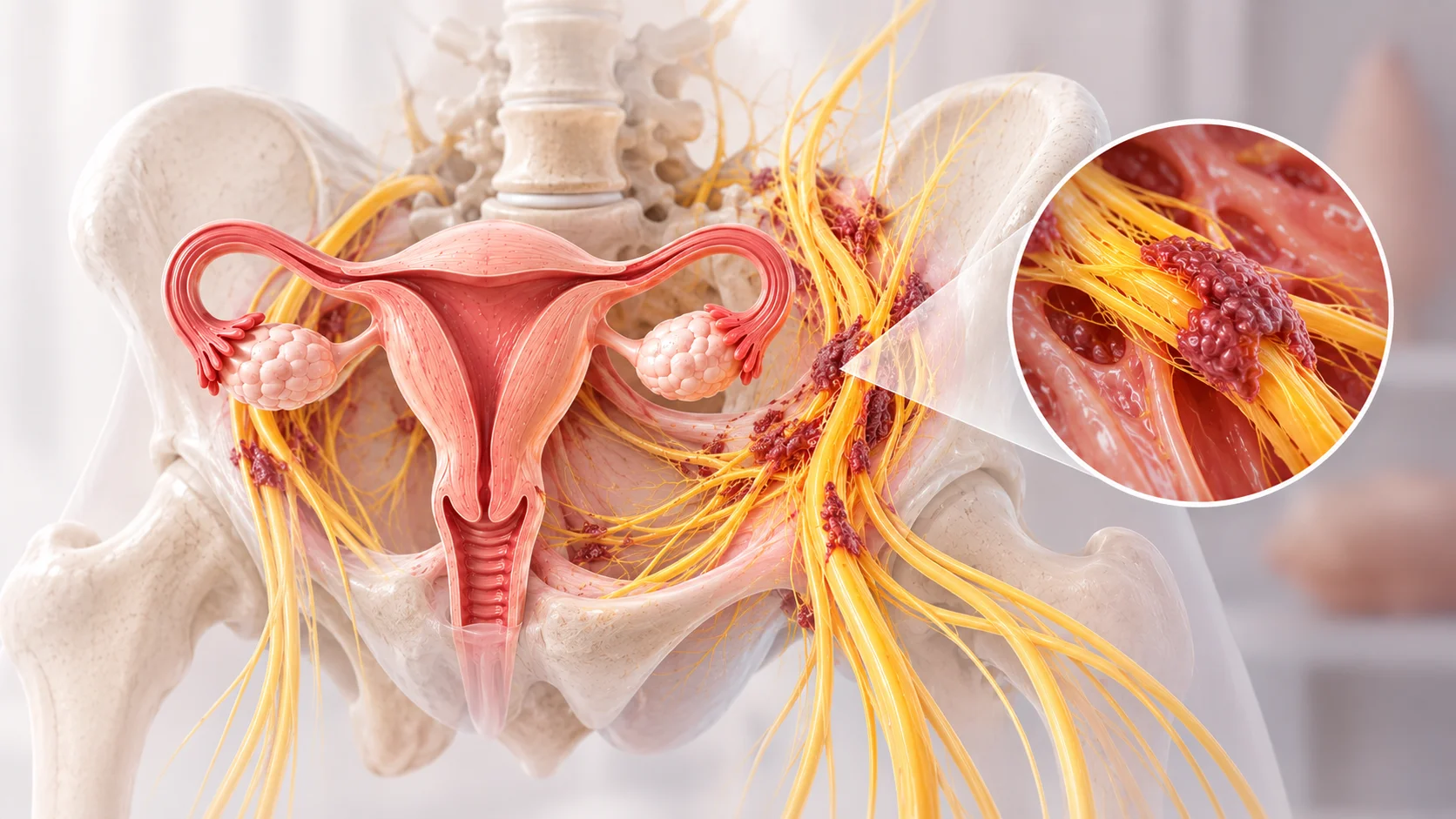
Nerve endometriosis is what happens when endometriosis grows on or beside the nerves of the pelvis, most often the sciatic, pudendal or obturator nerve, instead of staying on the ovaries or pelvic lining. Endometriosis itself is common: the WHO estimates it affects about 1 in 10 people of reproductive age, roughly 190 million worldwide. But when it wraps around a nerve, the pain feels very different.

Because these nerves lie deep in the pelvis, close to major blood vessels, this is a rare form of deep endometriosis and a tricky one to treat. So if you’ve been told it’s all in your head, know this: you are not imagining it. Endometriosis nerve pain has a real cause, and it usually needs specialist care, not routine treatment.

How Endometriosis Affects the Nerves? 

Endometriosis nerve pain has two causes working together. First, deposits press on, stretch or wrap around a pelvic nerve. This is how sciatic nerve endometriosis starts: tissue sits where the sciatic nerve leaves the pelvis, and the pain runs from the buttock down the back of the thigh, sometimes into the calf or foot.

Second, the tissue grows its own tiny nerve fibres and releases chemicals that make nearby nerves extra sensitive. Over time, the nerve itself becomes the problem, which is why neuropathic pain in endometriosis feels burning, tingling, electric or stabbing instead of cramp-like. Each nerve has its own pattern:

  • Sciatic nerve: pain in the buttock and leg, sometimes with tingling or weakness.
  • Pudendal nerve: burning pain around the perineum and genitals, usually worse when sitting.
  • Obturator nerve: pain in the inner thigh, sometimes with trouble moving the leg.

This double effect of pressure and sensitisation is why the pain follows a nerve path instead of staying in one spot.

Symptoms to Watch For 

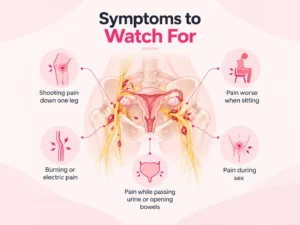
Nerve endometriosis feels like nerve pain rather than a cramp; burning, electric or shooting pain that travels down a leg, into the buttock, or around the perineum.

Nerve endometriosis symptoms infographic showing shooting leg pain, burning pain, pain when sitting, pain during sex, and painful urination or bowel movements.

The pattern of your pain matters more than its intensity, so note where it travels and bring that record with you. Pay attention to when the pain starts, what sets it off (sitting, periods, walking), and whether it feels burning, tingling or electric. These clues help your doctor recognise a nerve pattern far sooner. 

Why the Pain Can Continue After Treatment?

If your pain hasn’t fully gone after treatment, don’t lose hope. It doesn’t mean something went wrong. Nerve pain can linger because a nerve that has been sending pain signals for years doesn’t switch off overnight. Surgery removes the visible disease, but the nerve still needs time to settle.

Your brain and spinal cord play a part too. After long-term pain, the central nervous system can become extra sensitive, which is called central sensitisation. It’s like an alarm that keeps ringing after the problem is fixed. That’s why pelvic nerve pain can continue after a successful operation. The good news is that this alarm can be calmed with time and the right support, which is why nerve endometriosis is treated as a long-term condition, not fixed by one surgery.

How Nerve Endometriosis is Diagnosed?

No single test can confirm nerve endometriosis. Doctors piece it together from your symptoms, scans and what they see in surgery.

  • Symptom history: Share what the pain feels like, where it travels and whether it changes with your cycle. If it reaches your leg, mention it early.
  • Pelvic MRI: An MRI on an endometriosis protocol can spot deposits near the sciatic or pudendal nerve that ultrasound misses. Choose a specialist experienced in deep endometriosis.
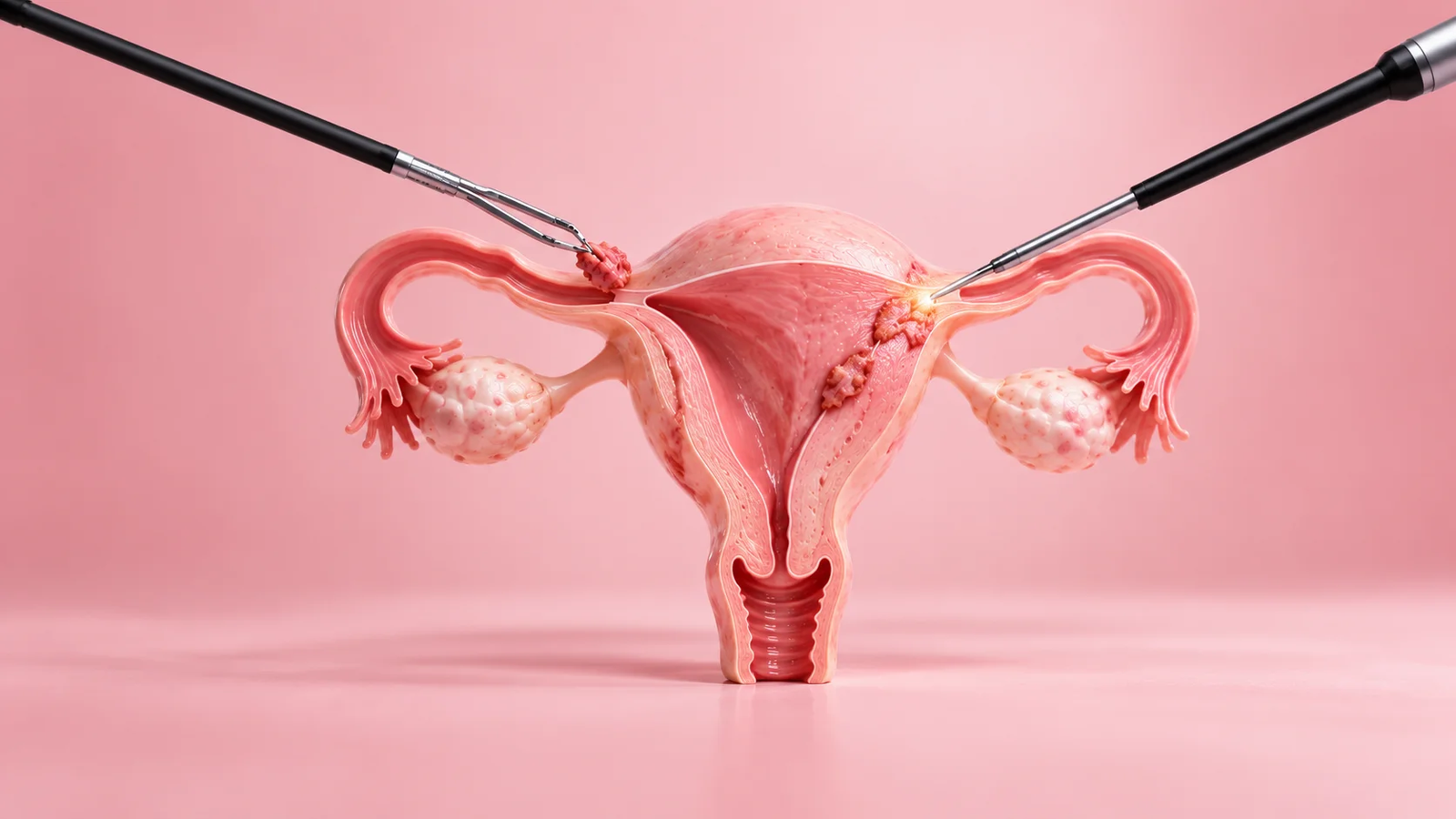
  • Robotic-assisted minimally invasive surgery: Robotic instruments give a magnified, precise view to confirm and treat the disease, though nerves deep in the pelvis can still be hard to see. 

A normal scan doesn’t rule out nerve involvement, so trust the pattern of your pain and ask for a proper evaluation.

Treatment Options

Nerve endometriosis is treated with a combination of nerve-targeted medication, hormonal treatment, pelvic floor physiotherapy and – in selected cases – specialist surgery.

There is no cure for endometriosis, so treatment aims to control pain and protect nerve function.

  • Nerve-targeted medication – nerve pain often responds better to drugs such as gabapentin, pregabalin or amitriptyline than to standard painkillers. These calm an overactive nerve.
  • Hormonal treatment – the combined pill, progestogens or GnRH agonists can reduce disease activity, though they may not fully address nerve pain.
  • Pelvic floor physiotherapy – helps with muscle guarding, which commonly accompanies pudendal symptoms.
  • Surgery – for significant nerve involvement, an experienced team may remove deposits near a nerve. This is complex work: those nerves control leg movement, bladder, bowel and sexual function, so surgery is offered only when the benefit clearly outweighs the risk.
  • Nerve entrapment release: Nerve entrapment by endometriotic scar tissue can be operated on to release the nerve with robotic instruments in minimally invasive surgery, followed by physiotherapy, medications and targeted therapy. 
  • Multidisciplinary care – the best outcomes come from a gynaecologist, radiologist, pain specialist and physiotherapist working as one team.

The goal is to calm the nerve and control the disease; there’s no cure for endometriosis itself, but symptoms can become far more manageable.

When to See a Gynaecologist in Gurgaon?

If your pelvic pain has lasted several months, shoots down your leg, or hasn’t improved with first-line treatment, get it checked, as burning, tingling or electric pain can point to nerve endometriosis. Seek urgent care for new leg weakness, foot drop, trouble walking, loss of bladder or bowel control, or numbness around the groin or saddle area.

Book a consultation with Dr. Aruna Kalra, a senior gynaecologist in Gurgaon with 25+ years of experience in advanced gynaecological and minimally invasive surgery, to find the cause of your pain and the right treatment for you.

The Bottom Line

Nerve endometriosis is a deeper form of endometriosis where tissue grows on or beside the sciatic, pudendal or obturator nerve. That’s why the pain burns, shoots down a leg or into the perineum, and often continues even after hormonal treatment or surgery. It doesn’t mean the pain is in your head, and it doesn’t mean you have to live with it.

It simply means the nerve itself needs attention. With a careful history, an MRI read by an expert in deep endometriosis, and a plan that combines nerve-targeted medication, physiotherapy and, when truly needed, nerve-sparing surgery, lasting relief is possible.

Frequently Asked Questions

1. What does nerve endometriosis feel like?

It feels like nerve pain, not a period cramp – burning, stabbing, electric or shooting. It tends to follow a path, often down one leg or into the perineum, and it can come with tingling or numbness. Many women describe it as pain that “travels” rather than stays in one spot.

2. Can endometriosis cause sciatica?

Yes. When deposits sit near the sciatic nerve where it leaves the pelvis, they can irritate it and produce sciatica-type pain running from the buttock down the back of the leg. If your sciatica flares with your cycle, endometriosis should be on the list – but so should a spine or hip cause, which is why imaging matters.

3. Is nerve endometriosis curable?

There’s no cure for endometriosis itself, and nerve involvement doesn’t change that. What can change is your pain. With the right combination of nerve-targeted medication, hormonal treatment, physiotherapy and, in selected cases, specialist surgery, symptoms often become far more manageable.

4. How is nerve endometriosis diagnosed?

Through a careful symptom history plus a pelvic MRI read using an endometriosis protocol, ideally at a centre that handles deep disease regularly. Laparoscopy may confirm the diagnosis, but imaging usually leads. No single test rules nerve involvement in or out on its own.

5. Does hysterectomy cure nerve endometriosis?

No. Hysterectomy removes the uterus and sometimes the ovaries; it can help with heavy bleeding and some pain, but it doesn’t guarantee relief from nerve pain. If the nerves are already sensitised, symptoms may continue afterwards. Hysterectomy is a considered decision, not a guaranteed fix.

Dr. Aruna Kalra's Medical Content Team

Dr. Aruna Kalra's Medical Content Team

Dr. Aruna Kalra's medical content team specialises in creating accurate, clear, and patient-focused healthcare content. With strong clinical understanding and expertise in technical writing and SEO, the team translates complex medical information into reliable, accessible resources that support informed decisions and uphold Dr. Aruna Kalra’s commitment to quality care.

This content is reviewed by

Dr. Aruna Kalra

Gynaecologist and Obstetrician

Dr Aruna Kalra is a senior gynaecologist and obstetrician with over 25 years of clinical experience, widely respected for her calm clinical judgement, ethical decision-making, and expertise in advanced gynaecological surgery and obstetric care.

Leave a Reply

Your email address will not be published. Required fields are marked *