Your consultation request has been successfully registered. Our counsellor will connect with you within the next working hour.
Need immediate help?
Call Us
A miscarriage can leave behind more than grief; it can leave behind a question with no clear answer: why did this happen? With recurrent miscarriage, that question doesn’t fade. It follows you into the next pregnancy, and the one after, making you wonder whether something was quietly standing in the way all along.
For many women, the answer lies in autoimmune disease, where the body that was meant to protect and welcome the baby starts fighting it. This blog covers how autoimmune disorders connect to recurrent miscarriage, the conditions most often responsible, the tests that catch them, and the treatment that follows, so you can move from wondering to knowing, and give your baby the chance to keep growing, until you finally get to hold it in your arms.
Miscarriage can happen for many reasons: problems with the embryo, the uterus, hormones, or other health conditions. When it happens twice or more, doctors call it recurrent miscarriage, or recurrent pregnancy loss, and the question underneath stays the same: is something repeatedly standing in the way?
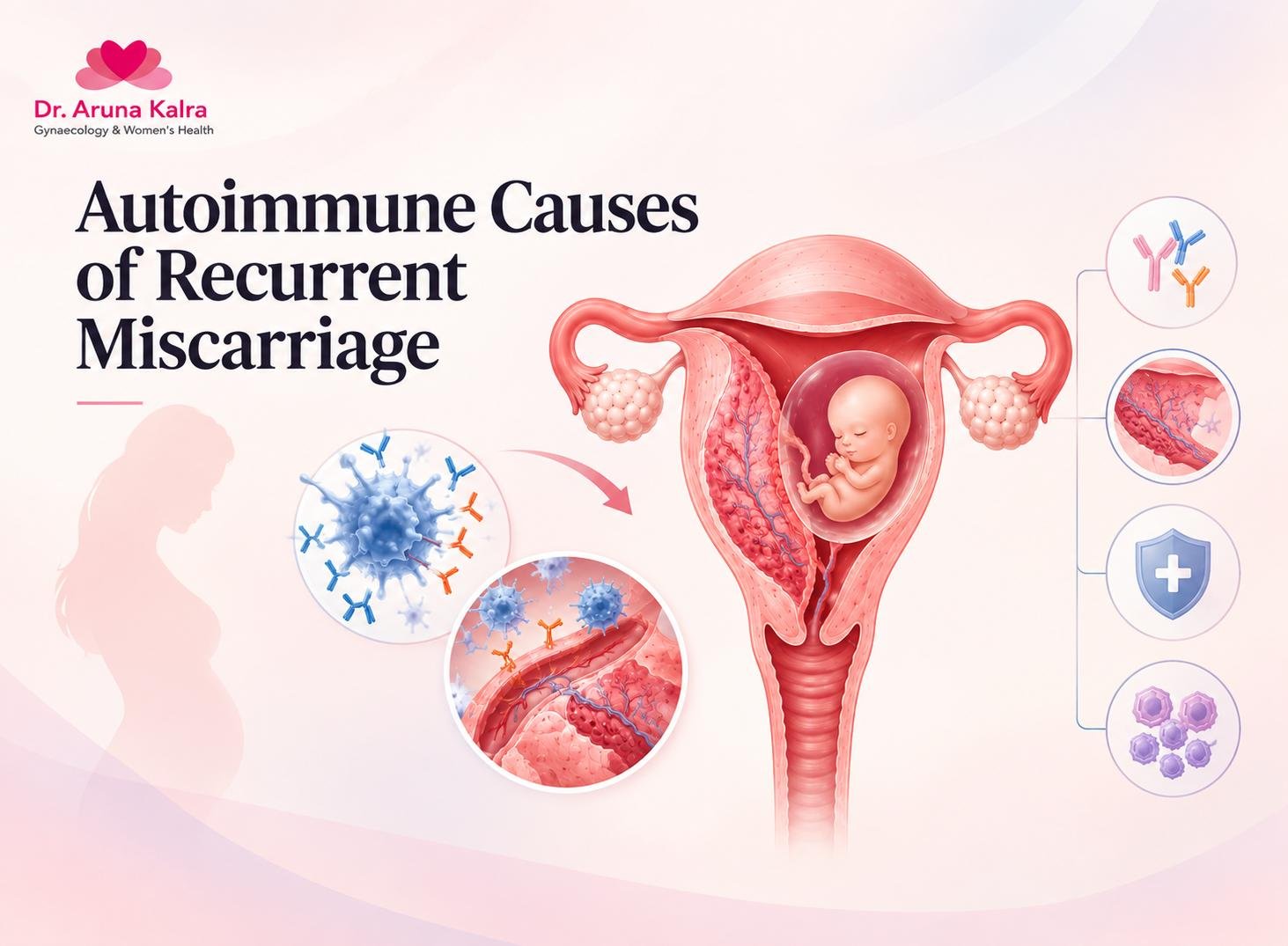
One possible answer is autoimmune disease. Your immune system is meant to be the body’s defence force, recognising what doesn’t belong and fighting it off. In autoimmune disease, that system misfires, treating the body’s own healthy cells and tissues as a threat.
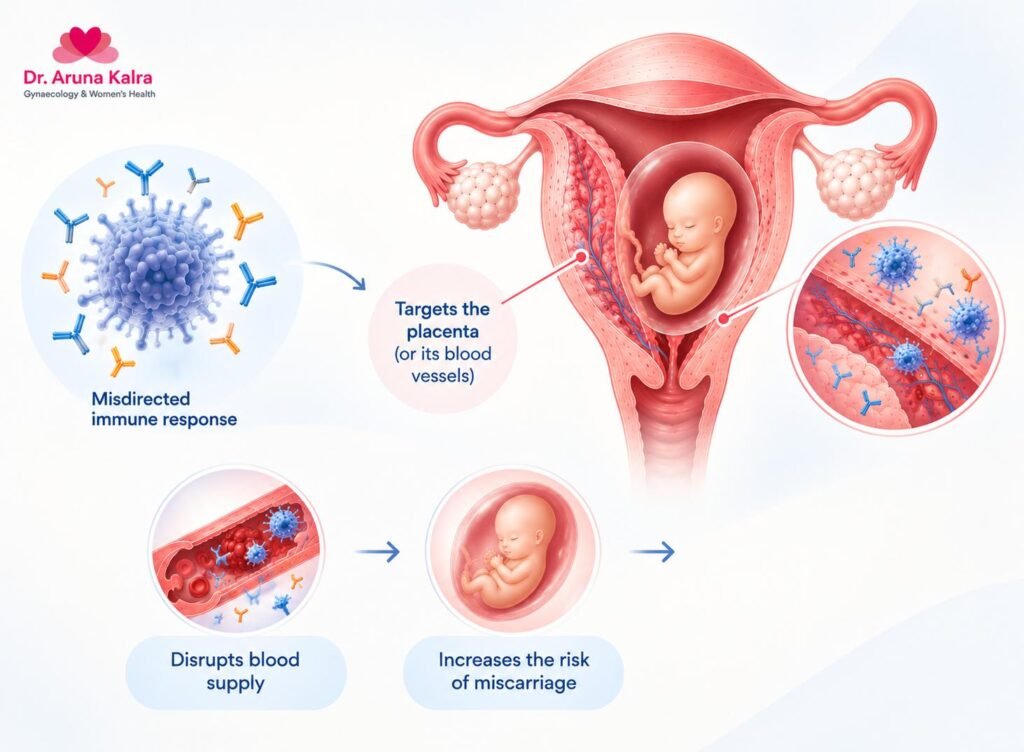
Pregnancy depends on this system working correctly. When the misdirected response targets the placenta, its blood vessels, or the processes that let a pregnancy grow, the risk of miscarriage rises.

The autoimmune disorders most often linked to recurrent miscarriage are antiphospholipid syndrome (APS), autoimmune thyroid disease, and systemic lupus erythematosus (SLE), each affecting pregnancy differently.
Why these can happen isn’t always clear. Genetics, past infections, and hormonal shifts, especially during pregnancy, are all thought to play a role, though for many women, no single trigger is ever pinned down, and the first real clue often comes only after a loss. .
There’s no single symptom that confirms an autoimmune cause. Most women only notice the miscarriage itself; some also have signs of the underlying condition.
“A lot of times, there’s no pain, no obvious sign, nothing that tells a woman something is wrong until she’s already lost a pregnancy. That’s why loss history matters more than symptoms here. Two or more losses, and we test,” says Dr. Aruna Kalra, Senior Gynaecologist & Obstetrician, Director, CK Birla Hospital, Gurgaon.
Doctors use blood tests, in line with NICE and ACOG guidelines, to check for the conditions most likely to affect pregnancy, a standard blood draw with no fasting or special preparation needed.
| Test | What it checks for | Why it is done |
| Antiphospholipid antibody tests | Lupus anticoagulant, anticardiolipin, and anti-β2 glycoprotein I antibodies | These antibodies can cause abnormal blood clotting. If positive, the test is repeated after at least 12 weeks to confirm they persist. |
| TSH | Thyroid hormone levels | Identifies thyroid problems linked to pregnancy loss. |
| TPO antibodies | Thyroid autoimmunity | Identifies autoimmune thyroid disease. |
| ANA test | Autoimmune antibodies | May be considered with joint pain or unusual rashes to screen for SLE-type immune reactions. |
| Coeliac screening | Gluten-related immune reaction | May be considered because it can affect nutrient absorption. |
Treatment depends on the autoimmune condition identified:
| Condition | Treatment Approach | How it helps |
| Antiphospholipid syndrome (APS) | Blood-thinning medication, as prescribed by your doctor | Reduces abnormal clot formation, supports placental blood flow |
| Autoimmune thyroid disease with abnormal thyroid function | Thyroid hormone replacement medication | Restores healthy thyroid hormone levels through pregnancy |
“Medications can help, but it’s important to get the dose and timing right. I’ve seen women start these medicines on their own simply because they’re easily available, without realising that when you take them and how you take them matters too,” says Dr. Aruna Kalra. “These medicines should always be taken under a doctor’s guidance, rather than self-managed.”
Yes. Many women with recurrent miscarriage go on to have a healthy pregnancy once the underlying cause is identified and managed.
In one study following women with recurrent miscarriage after diagnosis and treatment, over 8 in 10 who conceived again went on to have a live birth. Individual outcomes vary, A history of recurrent miscarriage doesn’t mean a future pregnancy has to end the same way.
See an obstetrician-gynaecologist if you have:
Seek immediate care for heavy bleeding, severe abdominal pain, or dizziness during a current pregnancy, don’t wait to schedule these. Dr. Aruna Kalra brings over 25 years of experience in diagnosing and managing recurrent pregnancy loss, guiding women through personalised evaluation and care planning.
Recurrent miscarriage is frightening, especially without a clear reason why, but it’s not always unexplained – where autoimmune conditions are the cause, they can be identified through the right tests and managed with targeted treatment. With proper diagnosis and care, many women go on to have a healthy, successful pregnancy.
Dr. Aruna Kalra's medical content team specialises in creating accurate, clear, and patient-focused healthcare content. With strong clinical understanding and expertise in technical writing and SEO, the team translates complex medical information into reliable, accessible resources that support informed decisions and uphold Dr. Aruna Kalra’s commitment to quality care.
Dr Aruna Kalra is a senior gynaecologist and obstetrician with over 25 years of clinical experience, widely respected for her calm clinical judgement, ethical decision-making, and expertise in advanced gynaecological surgery and obstetric care.