Call Back Call Back WhatsApp Whatsapp
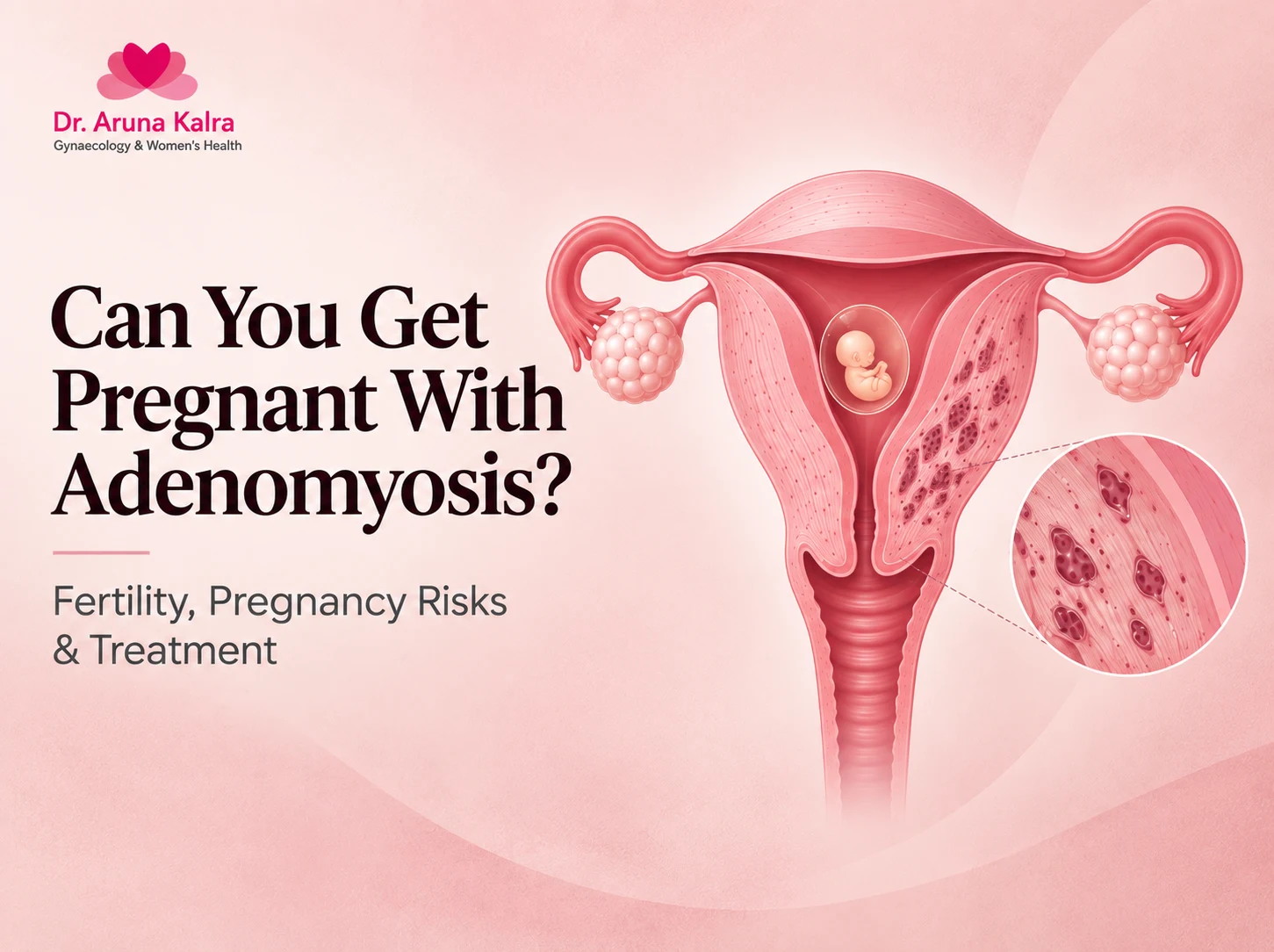
Can you get pregnant with adenomyosis? Medical illustration showing an adenomyosis-affected uterus with an embryo, highlighting fertility, pregnancy risks and treatment.

Can you get pregnant with adenomyosis? Fertility, Risks and Treatment

Roughly 1 in 5 women of reproductive age carry some degree of adenomyosis, and most never even find out until they’re trying to conceive. For a lot of women, this diagnosis comes with a fear that’s hard to shake off: can I get pregnant with adenomyosis?

If you’re sitting with that question yourself, here’s the reassurance you’re looking for: pregnancy is still very much possible. What changes is how the uterus behaves once adenomyosis sets in, and that shapes everything from conception to how the pregnancy itself unfolds.

Here’s everything worth knowing about adenomyosis pregnancy: what’s actually happening inside the uterus, the risks it brings during and after pregnancy, how it’s diagnosed, and the treatment options that can help if pregnancy is the goal.

What is Adenomyosis?

Adenomyosis happens when the tissue lining the uterus grows abnormally into surrounding areas. The unwelcome intrusion disturbs the surrounding tissues, which react by thickening and swelling.

The uterus becomes bigger, heavier, and less flexible, which can have detrimental effects on two of its core functions: conceiving and supporting pregnancy.

Adenomyosis and Pregnancy: From Invasion to Infertility

To understand the link between adenomyosis and infertility, let’s look at what actually happens inside the uterus.

The uterine wall has 3 layers:

Endometrium

  • Inner most
  • Made up of glands
  • Supports pregnancy: This is where the baby attaches (known as implantation)
  • Nourishes the baby as it grows

Myometrium

  • Middle layer
  • Made up of muscles
  • Muscles contract: Supports sperm’s movement towards the egg, ejects baby during labor, ejects blood during periods

Perimetrium

  • Outermost layer
  • Protects uterus

In a healthy woman, these three layers grow within their own territory. However, in adenomyosis, the inner endometrium starts crawling into the middle muscular layer, the myometrium. Pregnancy with adenomyosis can become tricky for the body because of the way an adenomyotic uterus behaves. The following table shows the effects of adenomyosis on the uterus and, therefore, fertility.

Function Healthy Uterus Adenomyosis uterus Effect on Pregnancy
Uterine space Normal Muscular layer thickens, swelling in uterus. Uterus enlarges, but cavity is distorted. Less room for the baby to implant and grow comfortably.
Contractions Gentle, coordinated Erratic, forceful Hard for baby to stably attach to the uterus
Receptivity to Pregnancy Hormones Normal Reduced Difficulty in embryo implantation
Inflammation Absent Present Interferes with Implantation and placenta formation


Egg Quality is usually unaffected. It’s mainly the uterine environment that has turned hostile.

Adenomyosis Symptoms

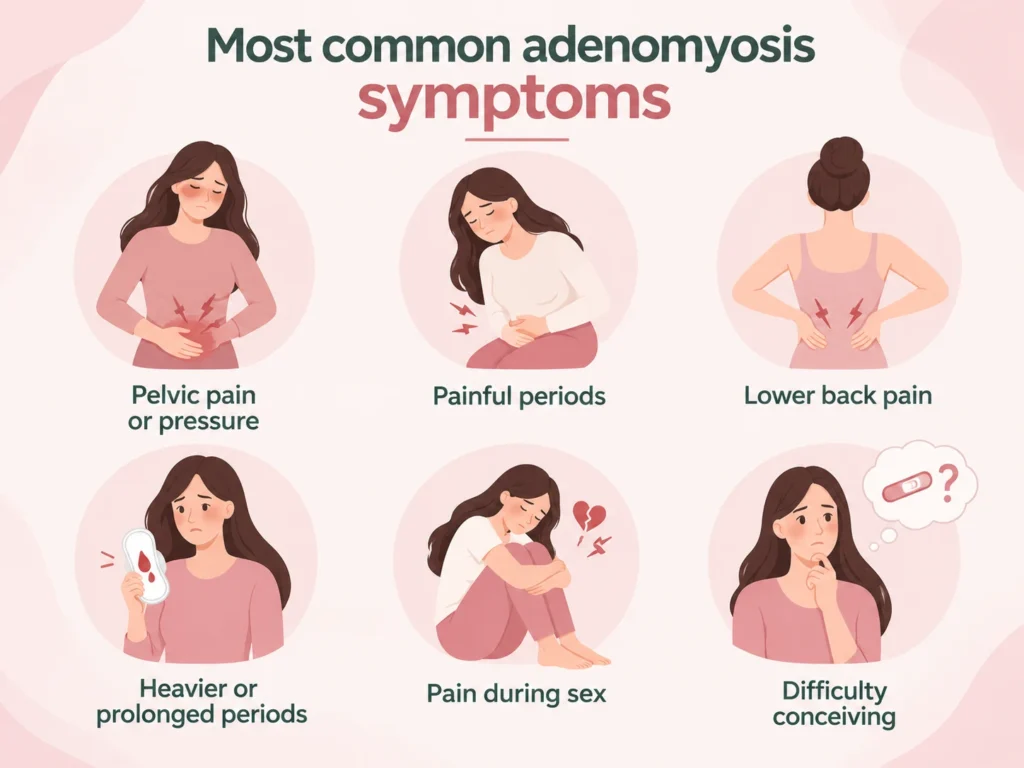
Symptoms of adenomyosis often show up through changes in your periods:

  • Heavier than usual periods
  • Cramps that get worse over the years
  • Constant lower belly pressure or pain
  • Pain during sex
  • A larger, tender uterus on examination

Most common adenomyosis symptoms including pelvic pain, painful periods, lower back pain, heavy or prolonged menstrual bleeding, pain during sex, and difficulty conceiving.

Some women have no symptoms at all, and only find out during a routine ultrasound, sometimes while trying to conceive.

Adenomyosis Risks

Risks of adenomyosis include several complications that can develop if the condition goes untreated:

  • Anaemia from chronic heavy menstrual bleeding
  • Long-term pelvic pain affecting daily life and intimacy
  • Enlarged uterus pressing on bladder/bowel, causing urinary or bowel discomfort
  • Higher chance of coexisting endometriosis or fibroids
  • Difficulty conceiving or maintaining pregnancy

Most of these risks of adenomyosis can be caught early and managed effectively with the right diagnosis and treatment, particularly for women planning a pregnancy.

Pregnancy with Adenomyosis

Can you get pregnant with adenomyosis? Yes, although adenomyosis may make conception more challenging and increase the risk of certain pregnancy complications.

How Adenomyosis May Affect Pregnancy

  • Difficulty conceiving: Changes in the uterus may affect embryo implantation.
  • Miscarriage: The condition is associated with an increased risk of miscarriage.
  • Preterm birth: The risk of premature delivery may be higher.
  • Pregnancy complications: Some women may face an increased risk of preeclampsia and foetal growth restriction.

Adenomyosis risks after pregnancy

Even after delivery, certain risks can follow if the mother already had adenomyosis:

  • Postpartum haemorrhage (heavier bleeding after delivery)
  • Uterine rupture risk (in case of fertility-sparing surgery like adenomyomectomy before this pregnancy)
  • Symptoms may temporarily ease during breastfeeding, then return once periods resume

Adenomyosis and miscarriage

Women with adenomyosis have a higher chance of miscarriage compared to those without it, largely because of the same uterine changes discussed earlier: inflammation, reduced receptivity, and a less stable environment for the embryo to hold onto.

This risk tends to be higher among women who are older or have coexisting conditions like endometriosis.

This doesn’t mean miscarriage is likely for every woman. It means the risk is higher on average. Early diagnosis, personalised fertility planning, and appropriate pregnancy monitoring can help women with adenomyosis make informed reproductive health decisions.

Adenomyosis Diagnosis

Adenomyosis is usually diagnosed through imaging, since there’s no blood test for it. Two main tools are used:

Transvaginal Ultrasound (TVS)

  • Go-to test for adenomyosis
  • Small probe inserted vaginally for a clear view of the uterus
  • Shows an enlarged uterus, thickened walls, or small cysts

MRI (Magnetic Resonance Imaging)

  • Used when ultrasound isn’t clear enough, or detailed mapping is needed before surgery/fertility treatment
  • Gives a more precise view of the condition
  • Better distinguishes adenomyosis from similar conditions like fibroids

Adenomyosis Treatment for Fertility

The right approach to adenomyosis treatment for pregnancy depends on the severity of adenomyosis, fertility goals, and whether you are trying to conceive naturally or with assisted reproduction.

IVF

  • Fertilisation happens in the lab, bypassing sperm transport issues
  • Embryo transferred directly into the uterus
  • Can still affect implantation and pregnancy maintenance; not an automatic fix

GnRH-agonist before IVF

  • Hormonal injections given for a few months before embryo transfer
  • Temporarily suppresses adenomyosis activity and inflammation
  • Aims to make uterus more receptive before implantation

Adenomyomectomy

  • Removes adenomyotic tissue from uterine wall
  • No clean boundary (unlike fibroid), some healthy muscle may go too
  • Can weaken uterus, needing closer monitoring in future pregnancies

HIFU

  • Focused ultrasound energy heats and destroys adenomyotic tissue
  • No incision, done externally
  • Newer option, still building long-term evidence

UAE (Uterine Artery Embolisation)

  • Blocks blood supply to adenomyotic tissue, shrinking it
  • Avoided for women trying to conceive; can reduce ovarian blood flow too

Managing adenomyosis and fertility together can be complex, which is why expert gynaecological guidance is important when deciding the next step.

When to see a gynaecologist for Adenomyosis?

Adenomyosis often gets caught late simply because women wait too long to get checked. A few signs are worth acting on sooner rather than later:

  • Periods soaking through faster than usual
  • Cramps that worsen over the years
  • Trying to conceive for 6-12 months without success
  • Persistent pelvic pain or pressure
  • New/ worsening pain during sex

If these changes are persistent or getting worse, getting evaluated early can help identify adenomyosis and guide timely treatment and fertility planning.

Expert Adenomyosis and Fertility Care

Dr. Aruna Kalra, Director & Senior Consultant, CK Birla Hospital, Gurgaon, is one of the trusted gynaecologists and obstetricians in Gurgaon, Haryana, with over 25 years of experience in women’s healthcare and advanced gynaecological surgery.

Her experience with adenomyosis and fertility is backed by:

  • MD in Obstetrics & Gynaecology, Da Vinci-certified robotic surgeon and proctor
  • 5,000+ surgeries, including adenomyomectomy, fibroid and endometriosis management
  • Managing Director, The Mums Clinic
  • Extensive experience managing high-risk pregnancies and fertility-focused adenomyosis care

Conclusion

Adenomyosis can make conception and pregnancy more challenging, but a diagnosis does not mean that becoming a mother is out of reach. Understanding how adenomyosis affects the uterus, identifying the condition early, and choosing a treatment plan based on your fertility goals can make a meaningful difference. With appropriate medical guidance and pregnancy monitoring, women with adenomyosis can work towards building the families they hope for.

Frequently Asked Questions

1. How to get pregnant with adenomyosis naturally?
Track ovulation, manage stress, maintain a healthy weight, and don’t delay consulting a gynaecologist if you’ve been trying for 6-12 months without success.

2. Can you get pregnant with adenomyosis and PCOS?
Yes, though having both together can make conception more complex, combined management from a gynaecologist improves the chances.

3. What is the success rate of adenomyosis pregnancy?
Adenomyosis pregnancy success rate varies with severity, age, and treatment, but with the right monitoring and care, most women with adenomyosis do go on to have successful pregnancies.

4. What is the difference between adenomyosis and endometriosis?
Adenomyosis is when endometrial tissue grows into the uterine muscle wall itself. Endometriosis is when similar tissue grows outside the uterus, on the ovaries, tubes, or pelvic lining.

5. Who is the best gynaecologist for adenomyosis treatment in Gurgaon?
Dr. Aruna Kalra, Director & Senior Consultant at CK Birla Hospital, Gurgaon, is one of the trusted choices for adenomyosis and fertility-focused care, with over 25 years of experience and 5,000+ surgeries.

Dr. Aruna Kalra's Medical Content Team

Dr. Aruna Kalra's Medical Content Team

Dr. Aruna Kalra's medical content team specialises in creating accurate, clear, and patient-focused healthcare content. With strong clinical understanding and expertise in technical writing and SEO, the team translates complex medical information into reliable, accessible resources that support informed decisions and uphold Dr. Aruna Kalra’s commitment to quality care.

This content is reviewed by

Dr. Aruna Kalra

Gynaecologist and Obstetrician

Dr Aruna Kalra is a senior gynaecologist and obstetrician with over 25 years of clinical experience, widely respected for her calm clinical judgement, ethical decision-making, and expertise in advanced gynaecological surgery and obstetric care.

Leave a Reply

Your email address will not be published. Required fields are marked *