Call Back Call Back WhatsApp Whatsapp
can uterine fibroids turn into cancer

Can Uterine Fibroids Turn Into Cancer? Symptoms & Warning Signs

Uterine fibroids are among the most common benign (non-cancerous) growths affecting the uterus. One of the most common concerns women have after being diagnosed with a fibroid is whether it can become cancerous. The answer is no: uterine fibroids do not turn into cancer. However, some rare uterine cancers can cause symptoms that resemble fibroids, which is why unusual symptoms should be properly evaluated.

In this guide, we’ll look at the difference between fibroids and rare uterine cancers, the symptoms you may experience, what changes may need medical attention, and how fibroids are diagnosed and treated.

What Are Uterine Fibroids?

Uterine fibroids, also known as leiomyomas, are non-cancerous growths that develop from the smooth muscle tissue of the uterus. They can vary considerably in size and number, and many women with fibroids do not experience any symptoms.

Fibroids are influenced by hormones such as oestrogen and progesterone, which is why they commonly develop or grow during the reproductive years and may shrink after menopause.

Depending on where they develop, fibroids are generally classified as:

  • Intramural fibroids – grow within the muscular wall of the uterus and are the most common type.
  • Subserosal fibroids – develop on the outer surface of the uterus.
  • Submucosal fibroids – grow towards the inner cavity of the uterus and are more commonly associated with heavy menstrual bleeding.
  • Pedunculated fibroids – develop on a stalk attached to the uterus and may grow either towards the uterine cavity or outward.

Can Fibroids Actually Become Cancerous?

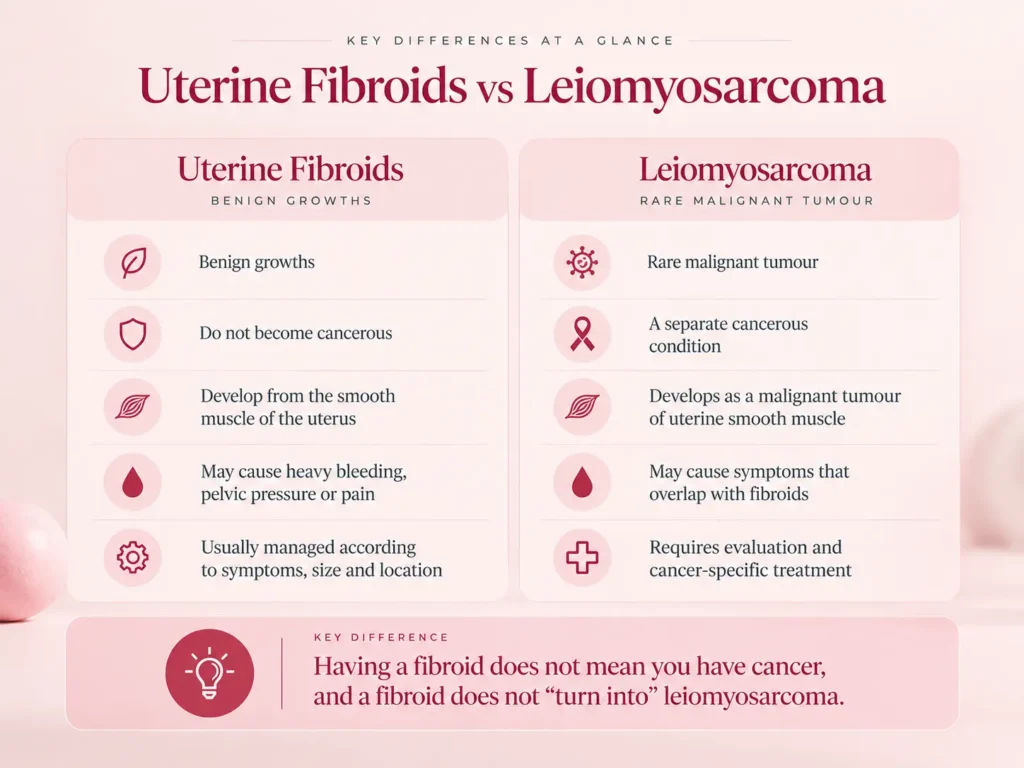
No. Uterine fibroids are benign growths and do not transform into cancer. A rare uterine cancer called leiomyosarcoma can develop in the smooth muscle of the uterus, but it is a separate condition rather than a fibroid becoming cancerous.

Having fibroids does not mean that you have cancer, and fibroids themselves do not increase your risk of developing uterine or other gynaecological cancers.

However, symptoms that are new, unusual or rapidly changing should not automatically be attributed to fibroids. A gynaecological evaluation by a fibroid specialist can help determine the cause.

Infographic comparing uterine fibroids and leiomyosarcoma, showing that fibroids are benign growths that do not become cancerous, while leiomyosarcoma is a rare malignant uterine tumour.

Fibroid Symptoms vs Cancer Warning Signs

Most symptoms associated with fibroids are caused by their size or location and are not signs of cancer. Common uterine fibroid symptoms include:

  • Heavy or prolonged menstrual bleeding, sometimes with blood clots
  • Pelvic pain or pressure, including a feeling of heaviness or fullness
  • Frequent urination when a fibroid puts pressure on the bladder
  • Bloating or abdominal enlargement
  • Lower back pain
  • Pain during intercourse
  • Difficulty conceiving in some women

Does Rapid Fibroid Growth Mean Cancer?

Not necessarily. A fibroid or uterus that appears to be growing quickly does not automatically indicate cancer. However, a rapidly enlarging pelvic mass should be evaluated to determine the underlying cause.

It is also important to remember that symptoms alone cannot reliably distinguish a benign fibroid from a rare uterine malignancy.

What About Fibroids After Menopause?

Fibroids often become smaller after menopause because of the reduction in reproductive hormones. Therefore, new bleeding after menopause or a newly detected or enlarging uterine mass after menopause should always be evaluated.

This does not necessarily mean cancer, but post-menopausal bleeding and new uterine growth should never be ignored.

Other new or unexplained symptoms, such as persistent pelvic pain, unusual vaginal discharge or unexplained weight loss, also warrant medical assessment. These symptoms are not specific to leiomyosarcoma and can have many different causes.

How Are Fibroids Diagnosed?

Medical assessment can help distinguish fibroid-related symptoms from other conditions.

  • Pelvic Ultrasound

Pelvic ultrasound is commonly used to identify fibroids and assess their size, number and location. It is often the first imaging investigation used when fibroids are suspected.

  • MRI

An MRI scan can provide more detailed images of the uterus and surrounding structures. It may be recommended when additional information is needed or when a uterine mass has unusual or complex features.

How Are Uterine Fibroids Treated?

Treatment of fibroids may include medication, minimally invasive procedures or surgery.

Click here to read more about: Laparoscopic gynaecological surgery

  • Myomectomy

Myomectomy is a surgical procedure in which fibroids are removed while preserving the uterus. It may be considered for women who wish to preserve their fertility or uterus.

Read more : Myomectomy surgery in Gurgaon

  • Hysterectomy

Hysterectomy involves removing the uterus and provides a definitive treatment for fibroids. It may be considered for women with severe symptoms who have completed their family, depending on their individual circumstances.

The decision about whether treatment is needed, and which treatment is most appropriate, should be made after discussing the benefits, risks and alternatives.

If you have been diagnosed with fibroids and are unsure what your symptoms or treatment options mean for you, understanding the available approaches can be a helpful first step. You can learn more about uterine fibroid treatment in Gurgaon and the factors that guide treatment decisions.

Final Thoughts

A diagnosis of fibroids can understandably leave you with concerns about your health, fertility and what treatment may involve. Knowing that fibroids are benign and do not become cancerous can offer some reassurance, but every woman’s symptoms and circumstances are different. Dr. Aruna Kalra takes the time to understand each patient’s concerns, symptoms and future reproductive plans before discussing the most appropriate course of care.

Whether fibroids are causing heavy bleeding, pelvic discomfort or fertility concerns, the focus remains on accurate diagnosis, individualised treatment and choosing surgery only when it is genuinely needed. The goal is to help every woman make informed decisions about her health.

Frequently Asked Questions

1. Can a fibroid turn into cancer?

No. Uterine fibroids are benign and do not turn into cancer. Leiomyosarcoma is a rare uterine cancer, but it is a separate tumour and should not be thought of as a fibroid that has become cancerous.

2. Can a large fibroid be cancerous?

Size alone does not mean that a fibroid is cancerous. Large fibroids can cause heavy bleeding, pelvic pressure, pain and abdominal enlargement while remaining benign. A rapidly changing or unusual pelvic mass should, however, should be evaluted.

3. Does rapid fibroid growth mean cancer?

No. Rapid growth does not automatically mean cancer. However, a rapidly enlarging pelvic mass should be assessed, particularly when it is accompanied by new or worsening symptoms or occurs after menopause.

4. Do fibroids increase the risk of uterine cancer?

Fibroids themselves do not increase the risk of developing uterine cancer. They are benign growths and are different from malignant uterine tumours.

5. What are the warning signs of uterine cancer that need medical evaluation?

Heavy or prolonged bleeding, persistent pelvic pain, bleeding after menopause, a rapidly enlarging pelvic mass or other new and unexplained symptoms should be assessed by a gynaecologist. These symptoms do not necessarily indicate cancer, but they should not be ignored.

Dr. Aruna Kalra's Medical Content Team

Dr. Aruna Kalra's Medical Content Team

Dr. Aruna Kalra's medical content team specialises in creating accurate, clear, and patient-focused healthcare content. With strong clinical understanding and expertise in technical writing and SEO, the team translates complex medical information into reliable, accessible resources that support informed decisions and uphold Dr. Aruna Kalra’s commitment to quality care.

This content is reviewed by

Dr. Aruna Kalra

Gynaecologist and Obstetrician

Dr Aruna Kalra is a senior gynaecologist and obstetrician with over 25 years of clinical experience, widely respected for her calm clinical judgement, ethical decision-making, and expertise in advanced gynaecological surgery and obstetric care.

Leave a Reply

Your email address will not be published. Required fields are marked *